Universalis, your very own breviary in pixels...

Friday, 1 October 2010

St Hildegard

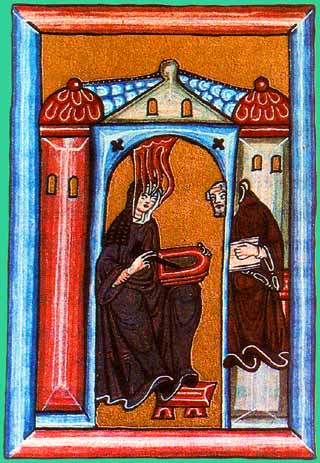
My sisters tell me that this movie is about to be released in this country.

http://home.clara.net/heureka/gaia/hildegard.jpg

The chances that it will play anywhere that I can get to are slim to none, but I am fascinated by St Hildegarde. (I highly recommend for your consideration anything Pope Benedict says about her and anything Emma Kirkby sings by her.)

Love her.

Not to mention her cookies. (My sister the pastry-baking whiz makes these at Christmas, but surely she could be persuaded to get out her measuring spoons a little early this year?)

The movie looks like... a film.

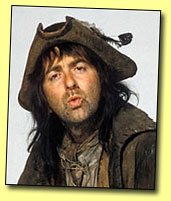
But com'on, would you just LURVE to see Hyacinth play the role?

http://michaelweishan.com/gardenblog/wp-content/uploads/2009/07/Hyacinth-Bouquet-229x300.jpg

Thursday, 30 September 2010

Saddened, But Not Surprised

I was willing to accept what many said, that that hand wringing by the more Catholic Than Thou sect over much bruited about poll results, (were they Gallup?,) that were purported to prove that most Catholics don't believe in the Real presence was uncalled for, that the questions were so phrased that it was possible to have a very good, (if not very profound,) understanding of Eucharistic theology and have answered the survey question "wrong, that it was badly confusingly phrased.

Well, the Church in America can now breath a sigh of relief, it is NOT a majority of us who don't believe in the Real Presence.

It is only about 45%.
Atheists and agnostics, Jews and Mormons are among the highest-scoring groups on a new survey of religious knowledge, outperforming evangelical Protestants, mainline Protestants and Catholics on questions about the core teachings, history and leading figures of major world religions.

On average, Americans correctly answer 16 of the 32 religious knowledge questions on the survey by the Pew Research Center's Forum on Religion & Public Life. Atheists and agnostics average 20.9 correct answers. Jews and Mormons do about as well, averaging 20.5 and 20.3 correct answers, respectively.

Protestants as a whole average 16 correct answers; Catholics as a whole, 14.7. Atheists and agnostics, Jews and Mormons perform better than other groups on the survey even after controlling for differing levels of education.

On questions about Christianity -- including a battery of questions about the Bible -- Mormons (7.9 out of 12 right on average) and white evangelical Protestants (7.3 correct on average) show the highest levels of knowledge.

Jews and atheists/agnostics stand out for their knowledge of other world religions, including Islam, Buddhism, Hinduism and Judaism; out of 11 such questions on the survey, Jews answer 7.9 correctly (nearly three better than the national average) and atheists/agnostics answer 7.5 correctly (2.5 better than the national average).

Atheists/agnostics and Jews also do particularly well on questions about the role of religion in public life, including a question about what the U.S. Constitution says about religion.

These are among the key findings of the U.S. Religious Knowledge Survey, a nationwide poll conducted from May 19 through June 6, 2010, among 3,412 Americans age 18 and older, on landlines and cell phones, in English and Spanish. Jews, Mormons and atheists/agnostics were oversampled to allow analysis of these relatively small groups.1

Previous surveys by the Pew Research Center have shown that America is among the most religious of the world's developed nations. Nearly six-in-ten U.S. adults say that religion is "very important" in their lives, and roughly four-in-ten say they attend worship services at least once a week.

But the U.S. Religious Knowledge Survey shows that large numbers of Americans are uninformed about the tenets, practices, history and leading figures of major faith traditions -- including their own. Many people also think the constitutional restrictions on religion in public schools are stricter than they really are.

More than four-in-ten Catholics in the United States (45%) do not know that their church teaches that the bread and wine used in Communion do not merely symbolize but actually become the body and blood of Christ.
(I would have flubbed the Jonathon Edwards question.)
https://blogger.googleusercontent.com/img/b/R29vZ2xl/AVvXsEit_MzQx02uf4l-mIm55X1NsVahXS2FVxaHw6QjMsaUX1DELiA0JiC4f0n4Zkp133ctxIUVD4CiF0VxdgJlEvgCoF2RfN7HrrRjAc3V962oYD3eiki9Ear2ZtXp5bolvoFjGpDYsFByoI6L/s400/monstrance.jpg

Thursday, 16 September 2010

Although I Would Not Mind Seeing Msgr. Ganswein ...

... competing in gymnastics, swimming, diving, running, equestrian....

But no, Stephen Fry informs us that that the Vatican does not field a team, and apparently this is very significant, impinging as it does on whether or not the Holy Father should be making a "state visit."

And Mr Fry is a very intelligent individual, so it must be so.

(I have no means of seeing or hearing any of said visit, at least for a week or so, so I must content myself with such snarking.)
(Which may be a violation of a recently renewed resolve to detach myself from sin, it's certainly putting myself in harm's way.... well, I am who I am.)

(Hey, and I guess the conceit behind the whole post, or at least the title and explanation of the title is another occasion of sin.... well, see above.)

Sunday, 12 September 2010

I have just returned from Mass, (an aside, it scares me goofy to plan on attending a "last chance Mass", but we did arrive in plenty of time, and there was a Mass,) brimming with hope for the future of the Church.
If the Holy Sacrifice of the Mass is both the source and the summit of our Faith, it bodes well for us all when the Mass is this well celebrated.

It was in the Extraordinary Form.
This young priest apparently attended a training session of the Canons regular of St John Cantius half a continent away, and then, by studying DVDs, immersed himself in the EF sufficiently to celebrate it very beautifully and very precisely indeed.

(Do I say "indeed' too much?)

He subtly raises his voice exactly the right amount to prompt what I believe is called a
dialogue Mass."

What struck me was how well, how thoroughly this priest, (whom I have assisted at Masses in the OF in years past,) submits himself to the Liturgy, of either Form.

It is so utterly NOT about him.

And you must understand, he is a witty charmer.

But he disappears in the Mass.

Because he decreases, He increases.

Sheer chance, because of the day, his excellent homily was about humility, and the "safety" it affords us.
Marvelous coincidence.

God send us many holy priests!


This icon (egg tempera and gold leaf on wood panel, 28” x 22”) is “based on a fifteenth century Greek prototype; here Christ is shown in Latin Rite vestments with a gold pelican over His heart, the ancient symbol of self-sacrifice. The borders contain a winding grapevine and altar prepared for the celebration of the liturgy of the Mass; in the borders are smaller icons of Melchizedek and St. Jean-Baptiste Vianney.” Incidentally, it is St. John Vianney whom Pope Benedict XVI, with the announcement of this special year, has declared the Universal Patron of PriestCzarnecki explains: “I wrote the icon about seven years ago [for seminarians and priests] to be able to see Christ in themselves, and themselves in Christ. We often hear that the icon is called a window; in this case, it’s also meant to be a mirror.” The Good Shepherd reminds the priest that he is to “lay down his life for his sheep” (www.seraphicrestorations.com).
.

Only the Dead Can Not Change Their Minds

We, the quick, (well, I'm of the sloooow quick,) can learn and grow.

Interesting interview with a filmmaker

The making of this film has been something of a voyage of discovery for me. I can’t be the only Catholic in the world who had major apprehensions on April 19 2005 as the conclave made its decisive choice to elect the first German pope since the 11th century (I don’t count Adrian VI, born in Utrecht in 1459, part of the Holy Roman Empire). I was worried about whether the former head of the Congregation for the Doctrine of the Faith might be just a little too polarising. I am no expert of conclave arithmetic, but my hunch was that he simply had too many doubters inside the College of Cardinals to get the required votes. Wrong. And I have been wrong about him, too. It is not that he has changed radically since taking up the papacy; it is simply that when you have to make a one-hour programme on one of the most clever and gifted people on the planet you have to look behind the headlines and the angry rants on the blogosphere. In short, you have to do justice to the man as best as you can.

Something similar is going on with Pope Benedict at the moment as has been occurring with John Henry Newman in recent months. Recognising the brilliant intellectual acumen of an individual often leads to wings, sections of the Church, staking their claim. They want to possess them as “their own”. I can understand why. But there are occasionally rare moments when these drives towards colonising the output of a gifted mind simply fail on account of the sheer dynamism and multi-facetedness of the individual concerned. So Pope Benedict’s uncompromising language on homosexuality, his disciplining of liberation theologians and 2007 Motu Proprio on the Old Rite of the Roman liturgy all have conservatives ticking their boxes and approving. But how then to deal with some rather contradictory evidence, not least of all his championing of workers’ rights in Caritas in Veritate and his uncompromising critique of neo-liberal economics?:

“I would like to remind everyone, especially everyone engaged in boosting the world’s economic and social assets, that the primary capital to be safeguarded and valued is man, the human person in his or her integrity” (italics from the text).

Similarly, those who complain of the betrayal of Vatican II and have this pontificate down as unreservedly restorationist and insular have some explaining to do. How is it that such a man commands the respect of a towering figure and atheist intellectual such as Jürgen Habermas, so much so that they are prepared to engage in a dialogue in public? How is it that such a man devotes his first encyclical to a profound discussion of human love and ponders on the potential for Eros and Agape to be a bridge between the human and the divine? Furthermore, how is it that this pope has taken every opportunity to emphasize that care from the environment is not some woolly-minded aspect of New Ageism, but an integral part of his theological outlook? So much so that in January His Holiness called in many of the ambassadors accredited to the Holy See and berated them for the “economic and political resistance” that resulted in the failure of last December’s climate summit in Copenhagen....

That Joseph Ratzinger has not quite lived up to his predictable billing is a point well understood by the Italian senator Marcello Pera, with whom Pope Benedict wrote a book on Europe and culture called Without Roots. When I met Pera in the heart of Rome earlier in the year he told me of the reaction of his fellow legislators.

“There was a huge prejudice,” Pera said. “Everyone was expecting the Rottweiler. I had invited him to address the Senate: this was the first time a cardinal had ever set foot inside the building and they were amazed. He really charmed them.” What exactly was Pera doing, as a godless man, engaging with the Vicar of Rome?

“I wanted these secularists to reflect. They talk about the absolutist nature of human rights, but they have no idea of the basis of where such an idea comes from – namely, that everyone is made in the image of God and deserves respect and has an integrity based on that.”

Pera makes a further point: “Let’s look at this question from a historical point of view. What happened to Europe, when it denied Christianity? We had Nazism, Fascism, Communism, anti-Semitism. That means that when Europe tried to avoid its own roots and so the culture of rights, specially the respect of the human person, Europe finds itself in dictatorship.”

Good for Pera. Can you imagine this from the archpriest of atheism, Richard Dawkins?

But the real delight for me has been in engaging with the writings of this 83-year-old man. The encyclicals have been given deserved space and attention. Yet you have to go back to 1968 for his classic, Introduction to Christianity, a work in which it becomes abundantly clear that, for this gentle and determined Bavarian, that man does not create his own truth through effort and endeavour, but, as he writes: “To believe as a Christian means in fact entrusting oneself to the meaning that upholds me and the world, taking it as the firm ground on which I can stand fearlessly… to believe as a Christian means understanding our existence as a response to the word, the logos, that upholds and maintains all things.”

I indulged in a long rant one night at dinner during the Colloquium this June (I have always depended on the manners of strangers... how I impose!) Does NO one understand the difference between primary and secondary sources any more?!?#?$%? I whinged.

But my pet peeve is warranted, I believe. How many of us in this country form our political opinions about someone based solely on what his enemies have said about him?

How often does someone want to operate based on the knowledge of a document which he has received from the "hand-out" given by a "facilitator" from a "workshop" -- rather from the easily accessed document?

How many hate the Church for what they just KNOW She believes --- and about which they are utterly mistaken? (Asbp Fulton Sheen had a famous thought on that...)

Excellent column in the paper a week or so back, (sorry, can't credit it,) warning us to beware of believing secondhand information that supports our prejudices and preconceptions.
Very wise words.

The sweet man who we are so blessed to have as pope right now has been a real victim of that sort of thinking.

"....because She loves."

(H/T to Dad29, via Domine, Da Mihi Hanc Aquam, via Mark Shea)


"The Church is intolerant in principle because she believes; she is tolerant in practice because she loves. The enemies of the Church are tolerant in principle because they do not believe; they are intolerant in practice because they do not love.
"
-- Pere Reginald Garrigou-Lagrange, OP

When I was small I tried unsuccessfully to explain my vision of the Church, as (the best my inarticulate self could do,) "lots of rules, little enforcement", and why that was just as it should be.

Thankfully, there are brilliant theologians to put things into words.

Friday, 10 September 2010

"Ego te absolvo a peccatis tuis..."

This morning the priest/confessor absolved me and blessed me in Latin.

I almost forgot to perform my penance, i was so startled...

To the best of my knowledge this priest never uses a word of Latin or Greek in the Mass, nor does anyone else in this parish, (though their practice is generally old-fashioned,or at least in a style I am assuming is old fashioned, since i don't recognize so much of it but it all has a whiff of "Flowers of the Rarest.")
(Except, strangely for the actual music, which emits the odor of a more recent but equally stale epoch.)

Saturday, 4 September 2010

"Ideally, the cantor should have an average voice"

"Let My People Sing" in US Catholic back in July by one Fr Phillip makes some good points (vis a vis silencing the song leader, re-orienting the choir,) but is pretty uninformed ( too much music pitched for "altos and sopranos, whose range is beyond the reach of ordinary voices" -- although I will grant that treble voices of whatever fach, when "leading" congregational singing are said, by some studies, to be more difficult for possessors of changed voices to follow or tune with.)

And his suggestion to "lower it a half note" betrays his misunderstanding of even basic vocabulary to discuss music; but he does have a point, (Although I think the problem is generally not key but range...)

'Here Is something a pastor will never hear in the back of the church after Mass: "I wish the people around me didn't sing so loud!"'

No, but those of us wont to sing out DO hear it, Father, and when people are too "polite" to actually say it within earshot, we still get "the look."


"Ideally, the cantor should have an average voice that by its ordinary sound encourages others to sing."

The jokes write themselves, ladies and gentlemen.

"I have seldom heard the congregation singing. The people may be singing, but I can't hear them. And I doubt if they can hear one another. What we all hear is the cantor or choir and organist or musicians, whose sound is well amplified throughout the church

I would venture to guess the fault is not the musicians', who are indeed amplified, but whoever had the place carpeted; and perhaps the musicians but just as likely the priest, liturgy committee or the congregation plumping for certain "contemporary" styles of music.
Both of these unfortunate situations positively REQUIRE amplification.

"If a parish has a trained choir, they could gather together to sing a hymn about five minutes before the start of Sunday Mass. This helps to set a prayerful mood. Then I suggest that they fan out into all sections of the congregation, sitting with family or friends, and assist the congregation in singing from the pews."

This may be a good temporary solution if you have limited congregational participation, or a great technique to use for special events, (I always loved it when one of my cantors who was a terrible cantor but terrific congregational singer assisted at Masses when was not leading the singing, because she, unlike every other cantor, sat toward the BACK. The entire congregation benefited and sang out more lustily, especially during communion, when at almost any Mass I've ever attended it was obvious that for the most part the people who are EAGER to participate audibly gravitate toward the front of the nave so that within a few moments for the beginning of the Communion of the Faithful congregational singing, for all intents and purposes, ceases.

But no, the real solution is to return to (or begin?) a true understanding of progressive solemnity (dialogues, anyone?) and of the differing vocal roles of the congregation and the choir/schola.
Repeat after me:
ORDINARY.
PROPER.

Asking the congregation to sing a bunch of hymns lessens the probability that they will sing that which is more important. Decades ago now, the no-one-would-possibly-accuse-it-of-being-conservative-or-traditionalist Notre Dame study of parish life noted that the more they are asked to sing within a given liturgy, the less the people WILL sing.
It stands to reason.
The recent emphasis by some liturgists on congregational singing "as long as" (bad translation of "dum", BTW,) the communion procession is patently absurd -- Billy Bigelow's notoriously long "Soliloquy" hasn't the duration of the vocal effort many parishes expect of their pew-sitters.
So, all the verses of three to five hymns, a psalm response, a Kyrie, a Gloria, an Alleluia (or other acclamation,) a Sanctus, a Memorial Acclamation, a "Great" amen, an Agnus Dei... and that list doesn't even include the Dominus vobiscum, Verbum Domine and preface dialogues, the dismissal, or the Lord's Prayer -- all of which should take precedence over The Church's One Foundation or Gather Us In.

(Why don't priests know that? forget music per se, what exactly is the liturgical training they receive in seminary?)

"have those waiting in the pews sing the words of a hymn while those walking in procession simply hum the melody. Humming can be very prayerful."

Omm..... okay, given the doggerel we are sometimes asked to sing humming might actually be preferable, but PLEASE - do you hear what you are saying?#?$?%?
Such an approach de facto elevates the tune to the point where it is not just equal, but superior to the text!
Do we think music is more important than the Word?
(That of course is another huge problem that, in the average Liturgy, we are just singin' words instead of singing the Word , but I digress.....)

"A parish grade school provides an ideal setting for teaching new acclamations, responsorial psalms, and hymns throughout the year. Once the children are taught a new song, they should be instructed to bring it home and let their parents hear what they learned. The students in the parish religious education program should also take part in learning new music. The children need to know how important they are in helping the congregation to sing on Sunday."

Amen, but said music needs to be selected by liturgical musicians not catechists who are mostly uninformed, (or worse, grossly misinformed,) about both liturgy and music, and appropriate praxis.

"Most parish congregations at Sunday Mass are made up of a wide variety of ages. That means that the music selected needs to include a wide variety of styles. Some music will appeal to young people, other music is more to the liking of seniors, and still other music will fit the tastes of folk enthusiasts or classical music lovers. If the music selection is all of one style (the favorite music of the director), it will soon bore many who can't relate to it. "

Nonsense. Smorgasbords are for cruises, not the gathering of the Mystical Body of Christ.

What anyone "likes", (including, no, especially the music director,) is almost irrelevant.

"In churches that are long and narrow, I recommend that people turn and face the center aisle for the gathering hymn. This way they can see the faces and hear the voices of those gathered across the aisle and get the feeling of being united in community. "

Right prescription, wrong reason -- IF you choose to forgo the Introit in favor of a congregational song, at least let the people SEE the procession.

"I would like to see the day when the priest, the lectors, the eucharistic ministers, the musicians and singers all face the congregation at the end of Mass and clap for how well they, the assembled faithful, sang and participated. "

Aside from the icky self-esteem-trophies-all-around! odor of that kind of patronization, umm... aren't these "singers" whom you want to clap for the congregation just PART of the congregation in your ideal ?

And come to think of it, if THEY are, why aren't the lay readers, (not "lectors",) and the Extraordinary (not "Eucharistic",) Ministers?

Friday, 3 September 2010

Saint Gregory the Great,
defend us in liturgy committee meetings;
be our protection against the silliness and snares of the Liturgical Industrial Complex.
May God rebuke them, we humbly pray:
and do thou, O patron of the heavenly chant,
by the power of God,
thrust into the dumpster their "planning guides" and all the insipid earworms
that prowl about the worship space perhaps not seeking but nonetheless compassing the stultification of souls.
Amen

Thursday, 26 August 2010

"Suffer the Tinkers to come unto..."

Interesting potential for a spanner in the works of the Papal visit to the Celtish Isles:
THE Pope's visit to Britain has been thrown into turmoil amid fears swarms of gipsies will turn up hoping to meet him.

Waves of travellers have already started descending on Birmingham ahead of the pontiff's four-day tour of the UK next month....

An emergency meeting with the Catholic Church was called over fears the whole city could be flooded with thousands more.

Police evicted the travellers who have come over from Co Donegal, Ireland.

But they just moved their camp yards across the road to the Shire Country Park yesterday.

The travellers told council officials they didn't have £25 pilgrim passes for the event on September 19.

Tuesday, 17 August 2010

On the assumption that the editorial supporting Creative Commons is itself....

... in the commons. Here is JT's article from Chant Cafe:
I've written uncountable numbers of words scolding ICEL for keeping its texts proprietary and charging for access - on grounds that this is a practice contrary to the whole history of Christianity. Even before Christianity, Judaism taught that the teaching of the Torah and the knowledge of the rabbis was not a commodity to be bought and sold. They could charge for the time, for the room in which they teach, and the books that contained the teaching, but the knowledge itself could not be commodified or limited. The Christian ideal of the same impulse is embodied in the prohibition against "simony" - a sin named for Simon Magus (Acts 8:18-24) who offered disciples money in exchange for the laying on of hands. Peter said to Simon: "Thy money perish with thee, because thou hast thought that the gift of God may be purchased with money."

But enough with the condemnations and lectures. I would like to make positive case for something wonderful and easy that ICEL could do right now. It could post a single note on its website that said: "All texts bearing an ICEL copyright may be distributed, copied, transmitted, or recorded, provided ICEL is acknowledged as the source." Over time, the front matter of all ninety-six books could be customized with this announcement on the next printing, but, for now, the digital announcement would be enough.

ICEL could formalize this announcement with a legal stamp of a Creative Commons Attribution 3.0 Unported license, which is nothing other than a means for getting around certain legal contingencies on texts. The plainly worded announcement would do the same work. The point is to put the texts into the commons where they belong and where they would be were it not for modern legislation that artificially restricts the use of texts.

How could ICEL do this? It is just a matter of doing it. There is nothing more to do. ICEL owns the texts and can control them completely. It is as simple as that. It is a small step with enormous consequences.

For starters, the outpouring of joy across the entire world would be spectacular to behold. It would be one of the largest jail breaks in the history of Christendom, all this wonderful books set free at last, just as the teachings and sermons and liturgical books of all ages were free from restrictions on their distribution.

For decades, ICEL has been the subject of decades of derision and beating, and now with the new texts on the way, this problem has intensified. All of this would change instantly. The global sense of elation would be palpable. The world press would take notice. The New York Times would sing the praises of ICEL. The point of Christian generosity and charity would be undeniable. There isn't a soul who wouldn't praise ICEL for having done the right thing. It would be a bright day in the history of the faith.

In light of this, ICEL should put up a banner on its site that says: "If you support our efforts to evangelize the world with these free resources, please consider a contribution." I would certainly dig as deep as I could. So would thousands, even millions of others. The gratitude would translate into vast financial contributions that I would expect would far exceed the amount that ICEL currently receives in royalties. Even better, this money would be given voluntarily, not extracted by force. The ICEL staff would feel better about itself and be flush with new resources to do its work.

What happens next? That's when the world community of English-speaking Catholics gets to work. Imagine of blizzard of fantastic iPhone apps that contain the Rite of Baptism for Children, The Book of Blessings, The Book of Prayers, The Code of Canon Law, The Order of Christian Funerals, and the entire Roman Missal, right there in the palm of your hand. No more lugging around heavy books (though anyone would be free to do so). No more being stuck without the right blessing at your fingertips.

What would ICEL have to do to develop these? Nothing. They would all be developed within a matter of weeks and months, on the initiative of people like me and thousands of others.

Every single one of the texts would be scanned and put online, some low quality but many high quality, perfect for printing at a moment's notice. These texts would appear on uncountable numbers of websites. They would be multiplied again and again and again without limit.

There would be Kindle editions and iPad editions and editions for every epub that is around. Publications that routinely pirate these texts without payment - you know who you are - would no longer have to fly under the radar screen or fear the copyright police. They could go about their missionary work with their heads held high.

Monasteries, convents, and parishes could all freely record their liturgical services and post them on youtube without having a sense that they are doing something wrong. They could sell CDs and custom missals to raise money for themselves.

The new missal, when it appears, would come in a huge range of editions. Some would be heavily bound with the most expensive leather and beautiful medieval stylings. Other editions would come in small paperback editions that you can carry in your pocket, and wouldn't that be glorious to have an edition that every single Catholic could afford to carry (imagine a price of, say, $7)? Talk about evangelization!

The Bishops and ICEL are right now extremely concerned about catechesis on the new missal. Well, stop worrying about it. Making the texts part of the commons will allow all the creative energies of all Catholics to put to use in the cause of education. Nothing educates like the text itself, and so long as the text lives in copyright prison, there will be problems. Why limit the Gospel? Free it completely and 90% of the work is already done for you. ICEL has limited resources, so why not call upon the vast energies out there just waiting for a chance to help?

The next stage will be spin off publications. There will be manuals, hymnbooks, songbooks, children's books, commentaries, reference sets, dictionaries, concordances, searchable files, illustrated books, and many other media types that no one has yet thought of. There will be audio books and instructional DVDs and CDs, as well as downloadable MP3s. Do you know of priests who have trouble singing the whole Mass? Well, this is an easy thing to correct if anyone can make a demo file and distribute it without paying for the privilege. Keep in mind that none of this can be done now, at least not legally, without jumping through hoops and paying ICEL. This is why it is not being done now!

Why not harness all of these energies on behalf of the Catholic liturgical project? ICEL needs help. It cannot be singularly charged with the whole burden. It cannot expect only four publishers who know the ropes to do the bulk of the work here. It is a very simple matter of freeing the texts that would make the difference. In other words, all of ICEL's texts would take on the same precise status as all Christian texts have had from the first to the late nineteenth century when copyright enforcement first became global and some Christians wrongly took the bait and deliberately set out to limit their influence.

To be sure, many Christian texts are part of the commons already. The old Latin Missal is an example. No one has to pay anyone to publish that text. The same is true with Gregorian chant from all ages. The same is true of the Douay-Rheims Bible and hundreds of other translations that are in public domain now.

Take a close look here: all of these source texts are flourishing in every way right now! I can call take out my phone and look at the completely music in the old rite for the whole of today's services, right now, and it takes about two seconds. I cannot do this with all of the texts that are under conventional copyright. There is a reason for this.

The ICEL decision would inspire other publishers too and perhaps put an end to the copyright arms race that is killing the life of the liturgical text. GIA might move to do the same with the Grail Psalter. The same could happen with the NAB translation of the Bible. Composers might even follow in line. The entire house of copyright cards could fall, and what a blessing that would be! But it all must start with ICEL.

So a plea to ICEL: thousands of others like me want to be involved. We want to help. We want to spread the Good News. We want to work as messengers for Catholic liturgy. Please allow us to do so in every possible way. It is just a matter of posting a simple sentence.

St. Augustine once gave a homily about the divine qualities of the word and its capacity for being shared. He pointed out that he need not parse out his words carefully for fear of losing them to the hearer, but rather that the hearer can take all of his words even as he can retain them. He made an analogy here to the way the Father and the Son can have the same thoughts and the same words without the one displacing the other. Herein lies the mystery and glory of the message, the magnificence of the idea and its infinite reproducability. It was precisely the capacity of words to be spread, and for truth to be held by an unlimited number of people, that inspired the spreading of Christianity all over the world.

Let's recall that power, that glory, and make it happen again.
(dang, I miss easy internet access... who'd a thunk?)

Liturgical Orphans

One untoward effect of a good retreat, or a sacred music colloquium, or even a serendipitous stumbling upon the Divine Office being prayed solemnly and corporately and beautifully, (am I remembering correctly, was there some question on the 900-Pound Catholic Blog as to whether one was actually joined to the Church's liturgical life when one prayed the L ot H alone? I digress...) all three of which I have had the great blessing to experience in the past two months, is that it takes real, conscious effort not to subsequently sit... er... kneel in judgment when one finds oneself in less... carefully prepared liturgies.

Even when one is not annoyed, one can hardly help but be distracted when a presider greets the Faithful with "The Lord IS with you...", and then gives what amounts to a long homily betwixt the greeting and the penitential rite; when an, admittedly lovely-voiced, cantatrix croons suggestively into the console-mounted mic'; when a phalanx of seven extraordinary ministers routinely marches on the sanctuary to help the shepherd feed his flock of, I-am-not-making-this-up-I-counted-the-second-day-of-the-routine-mea-culpa, THIRTY-something, (when is someone in charge going to notice that more time is spent singling the ems out with a specially choreographed Communion than is saved by having them then administer the Sacrament to the rest of the assembly; when not one, not two, but THREE different individuals open for the Main Event, each welcoming us, each introducing themselves, (in one case also naming "my partner in proclaiming the Word,") and each reminding us what day it was; an adult server whose alb is so tightly cinched and so snugly fitted that I was reminded of Joan on Mad Men; loopy General Intercessions...

On this house-hunting expedition, I am feeling, (and Himself shares this,) most homeless on Sunday mornings.
And who would have imagined it? but the fact that it is out of season has meant being not so much deprived as spared as we seek a parish. "Dry" masses are preferable, for the most part, to those with music, (which tend to the insipidly moist...)

So it is with great joy, (and not a little shame for my pessimism, O Me, of little faith!) that I say that Mass on Sunday was very well prepared and conducted indeed.
I had only half-jokingly said the day before that my major goal was simply to avoid Hail Mary Gentle Woman, but that I had no expectation of being able to do so.
Well! three sturdy hymns, a nice little responsorial Magnificat during the Communion procession, the correct lectionary psalm, a decent Ordinary, superbly played and sufficiently assertive and vigorous organ accompaniments, excellent organ pre- and postludes and interesting improvs, (though I might question the Music From the Hearts of Space registration on one of the latter...;oD); a suitably talented yet even more suitably diffident cantor; a wide ranging homily that utilized the readings AND practical application AND pertinent personal anecdotes AND doctrine and dogma AND Catholic identity...

Anyway, I don't know to whom to be grateful, the cathedral rector, or the diocesan O of W, or the Bishop -- but thank you, thank you, thank you.

Come to think of it, who am I, (is the accepted term Left-foot Lucy, or One-foot Wanda?) to question anyone's registration?

It is probably too far away to make it my parish when the dust settles on our domestic arrangements, but it's a great comfort to know it's there.

Incidentally, the aforementioned serendipitous L ot H? an errand in Chicago last month finished early, Himself dropped me off at St John Cantius en route to another errand. I figured I could pray quietly until Vespers, (it wasn't actually the Vespers themselves upon which I stumbled, I knew about them...) and instead was uplifted by what I can only suppose was a bit of practice for an upcoming organ recital by Br Jonathan Ryan. Passion Symphony by Marcel Dupré?
Glorious, thrilling. (And talk about "Christmas in July"...)
I am frankly envious of anyone who can attend.
But I shouldn't feel too deprived, I shall keep my eye out for what Adam Brakel (sp?) is accomplishing at the cathedral here.

Tuesday, 27 July 2010

"Gay priests giving gay priests a bad name"

No, honestly, that's how the headline to Bryan Cone's US Catholic piece reads.

You can't make this stuff up, well, maybe the Onion could, but there's no need, it satirizes itself.

Saturday, 24 July 2010

The Value of Ritual Over Spontaneity

A thread over at PrayTell misled me with the lede, I thought it would be about the General Intercessions, since it concerned a book by James McCartin, Prayers of the Faithful.
No, it more generally concerns the spiritual life of American Catholics, and to some extent, the expression finds in devotions, in popular piety.

Two commentators had thoughts that caught my attention:
Most of us don’t live in our parents’ neighborhood or even their state. ISTM that the rise of the traditionalists in all their varieties are one of many attempts to build praying communities within a widely dispersed Church.
Michael O'Connor
I'd never thought of that before, but surely the hunger for custom, and ritual denied so many of us either by our nomadic existence, or by deliberate suppression, is a force to be reckoned with in the burgeoning of the various forms of neo-traditionalism.

And I thought this was a wonderful apologia of liturgical worship in response to another poster's bemoaning the lack of aptitude, (I would ascribe it to a wholesome reluctance,) for spontaneity he finds in Catholics:
Catholics have traditionally understood talking to God through the use of non-spontaneous texts as being just as authentic as spontaneous prayer.

...At times of significant rituals of life – especially [death] – spontaneous words are not often lacking, but often become obstacles, whereas ritual expressions convey the inexpressible more aptly.

To some extent, that reliance on ritualized texts is a sign of the inexpressible dimension of our conversation with God. ... the use of the ritualized texts has more dimensions to it....I would be wary of is the assumption that spontaneity=authenticity.
Karl Liam Saur
Amen!
Not only do words other than of our own immediate devising better convey the ineffable, but there is extraordinary comfort in being able to rely upon them, in not having creative demands added to the burdens one is already under at some of life's great moments.
I really think this, the notion of a received pattern to our worship, is one of the greatest strengths of Catholicism, and one of its strongest tools in effecting true catholicity, and I think TPTB have ignored that to their perils, and ours, in recent Church .... doings.

Wednesday, 21 July 2010

Sunday, 18 July 2010

Fly? Why?

What is it about the human psyche, okay... MY psyche, that feels such inordinate satisfaction of a steamy summer afternoon, to have finally vanquished, er, well ... successfully swatted a lone, noisy fly that had loitered about the house for the last day or so?

The Mighty Hunter

Keeping the Sabbath

This article doesn't really resonate with me, (I have little patience with those who are nostalgic for the trappings of a faith they do not hold,) I only take note of the fact that a piece in the NY Times startlingly admits that James Carroll, the go-to guy for commentary on Catholicism for much of the MS print M, is, and identifies him as, a "dissenting Catholic."

No doubt were the article on a page more journalisticly demanding than the Style section, the "dissenting" would have been omitted, and the Times would go back to pretending that a disgruntled ex-employees unable to live up to pledges and promises freely given offer the most objective insights into an institution...

I, of course, am non-compliant, for years nearly my only gainful employment has been on the Sabbath; even today, I am scurrying out to sub, (I had forgotten how interesting it can be to hear the same homily four times -- I am serious, speaking only of prepared homilies now, now the winging-it nonsense of one of my favorite priests, which becomes very tiresome. Observing the differences, and the homilist's willingness to engage, [or otherwise,] the changing "character" of his auditors from Mass to Mass is like watching any other kind of live performer, and one can learn as much from the nont-so-competent as from the fine ones.)

Friday, 16 July 2010

Prayers Requested

Please pray for a dear, dear woman, a long time friend of my family, Sr Virginia Mary, a cloistered Dominican.
I have heard that she is gravely ill.

One of the jolliest saintly people I have ever known.

Speaking of false choices...

... I have tried never to make the Mass of Creation my own personal whipping boy for all that is wrong with contemporary music that is used by Catholics (note: not "contemporary Catholic music,") but isn't there some middle ground between holding it up as the epitome of all that is rotten, and holding it up as some sort of ideal?
Lots and lots and lots of new Mass settings were set out and presented and sung at this convention. They all started to sound the same after a while. A few somewhat nice things here and there, but no apparent new “Mass of Creation” or “Community Mass” on the horizon.

And another thing...

... how is programm[ing] the entire Ordinary and much of the Proper in Latin [and Greek] chant, and us[ing] Latin for some of the presidential texts" producing "a sudden lurch, [that] would [inarguably] feel like someone is pushing an agenda" (which happens to be the Church's agenda for the Roman rite, but never mind....,) the only alternative to dual liturgies one entirely in Gregorian chant, and one entirely in English and chant-free?

It's a false choice.