Universalis, your very own breviary in pixels...

Showing posts with label Sacraments. Show all posts

Thursday, 13 April 2017

"The Thursday of Mysteries"

Isn't that a beautiful way to describe today?
I've only just learned it.

I appreciate that word "mysteries" used synonymously with "sacraments," very much.
At Eastern Rite liturgies I've always thrilled a bit at the phrase, "I will not reveal Your Mysteries to your enemies," as if we were suddenly plunged by the universality and sacred timeliness/timelessness of the Sacrifice into penal times, or the first century and were willing to die rather than betray the goings-on in the catacombs to the authorities.
One doesn't see it much in the West, although the sheet music from which I first learned the Bruckner Locus Iste translated sacramentum that way, IIRC.
This is, I promise you, not about aesthetic snobbery, but the music that will happen tonight at any of the Roman Catholic churches within reach will be so jarringly bad or inappropriate that I was casting about for an alternative, and my default Byzantine parish seems not to be having any liturgy tonight, can that be possible?
(Here, I can prove, at least to my own satisfaction that it's not snootiness on my part - if it were not a thousand miles away I would attend an Extraordinary Form Mass I used to hear with some regularity, where the propers that are not sung recto tono or to a psalm tone would be unrecognizable they would be rendered so badly, by a choir that included on singer with a voice like an electric cheese grater. The appropriate done badly by worshipers giving their best is more fitting than the inappropriate done well by worshipers giving their favorites.)
Anyway, I found a church, (of a rite that I don't know well at all,) whose bulletin gives a time for Liturgy of  Thursday of Mysteries.
(And between Holy Orders and Eucharist, and washing of the feet - do Easterners do that? dont know -  our evening will be filled with Mystery.)
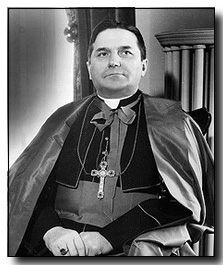
Was this Father Hardon?
"A mystery is not a truth about which we can know nothing. It is a truth about which we cannot know everything."

Friday, 17 February 2017

What Cardinal Kasper Said, If Cardinal Kasper Said What I Believe Cardinal Kasper To Have Said

In this day of Fake News, or rather, constant accusations of fake news, one is reminded more than ever that no one can have empirical knowledge of all matters that interests or concerns him.
I am not there to hear to the actual words spoken by a president, or here to watch the actual expressions and gestures of a pope or that other place to see the actions taken by a terrorist .

When it gets down to it, I don't know that those images of storms flickering on the screen are of an actual event happening now, that the contents of this pill bottle are what the box describes, or even if they are, that they will do what I am told by my doctor who is told by the FDA or a pharmaceutical conglomerate, that they will.
But you have to trust somebody, and I choose to trust the weather man, and I choose to trust my GP. One hopes previous accuracy or good faith is, if not quite a pledge, at least an indication of present accuracy and good faith.
National Review, New York Times, Breitbart, HuffPo... who knows?
An additional problem in this area of finding and trusting sources for information, especially in the ecclesiastical realm is the translation issue.
All that is by way of prelude to saying, Sandro Magister is someone in whom I have a high degree of trust. He has a  piece on the push for inter-communion in recent ecumenical initiatives, including some of an interview Cardinal Kasper gave, to which I can only say, What the Francis? [Emphasis supplied]
Cardinal Kasper: We are friends, we are brothers and sisters. We have begun this ecumenical way and we have taken many steps in the meantime. We have good hope that one day we will even reach full communion. Even now we already have a great deal of communion among us.
       Q: A communion at the Eucharistic table as well?
Cardinal Kasper:Yes, shared communion in certain cases, I think so. If [two spouses, one Catholic and one Protestant] share the same Eucharistic faith - this is the presupposition - and if they are interiorly disposed, they can decide in their conscience to receive communion. And this is also the position, I think, of the current pope, because there is a process of coming together; and a couple, a family, cannot be divided in front of the altar.
Um, no.
The entire premise is flawed because the two descriptors of this hypothetical couple are incongruous, they cannot exist at one and the same time.
If they ACTUALLY "share the same Eucharistic faith" it is either because the one has ceased to be Catholic or the other has ceased to be protestant.
(Yes, I'm shouting.)
And the idea that just because they are a couple they cannot be divided this way is absurd.
He's speaking of mainline protestants with liturgical worship and at least some sacraments, whose Eucharist faith is similar, (NOT "the same,") but what of others?
What if one is Catholic and the other Mormon? or Baptist? or Jewish? of Satanist? or pagan? or Muslim? or Taoist? or atheist?Should they be divided in front of the altar?

Saturday, 14 January 2017

The Woman Taken in An Other-Than-First Marriage

"This woman was caught in the very act of committing adultery. Now in the law, Moses commanded us to stone such women. So what do you say?”
They said this to test him, so that they could have some charge to bring against him.
Jesus asked, "So, is this a formal dubium?"
And they answered,"Well, uhm... I dunno... so what if it is?"
And He spoke, "Then I might not answer you. So.... in what diocese do you live?"
And one said, "Uhm.... Malta?"
But yet another declared, "I'm from Philly."
And they were sore confused.
But when they continued asking him, he straightened up and said to them, “Let the one among you who is without sin be the first to throw a stone at her.”
Again he bent down and wrote on the ground.
And in response, they went away one by one, beginning with the elders. So he was left alone with the woman before him.
Then Jesus straightened up and said to her, “Woman, where are they? Has no one condemned you?”
She replied, “No one, sir.”
Then Jesus said, "Are you at peace with God?"
The woman replied, "Yeah, I guess so..."
“Neither do I condemn you. Go, from now on try to make it work with your current partner, okay?”

Thursday, 29 September 2016

US Bishops Laud Amoris Laetitia's 'Hopeful, Positive Tone"

The USCCB says they like the "hopeful, positive tone" of the Holy Father's post-synodal exortation on marriage.
What a joyful optimism must the Holy Father enjoy, to be hopeful and positive about unions, 50% of which he guesses are invalid.
I just don't think it is "myopic" to see the contradictions and ambiguities that rise almost to the level of error, nor do I think to call attention to them indicates a lack of love for or obedience to the Pope.

I had a friend in theatre who used to say of appearing in a lousy vehicle and still giving the best performance you know how, "It's like draggin' a dead horse around the stage and pretending it don't stink."
The USCCB has set itself the task of dragging a rather noisome animal there.
God bless them.

Monday, 26 September 2016

Profanation of the Eucharist, the Sanctity of Marriage, and "Venue Shopping"

I am, if it is not too glib to say so, a great "fan" of the Church's "annulment" process. (The scare quotes are in recognition that there is no such thing as annulment in the Church, rather, there is a process for discovering the nullity of a putative marriage.)
The gracious and generous manner in which the process is handled in this country, at least, has benefited me greatly.
I note this to admit upfront that I am hardly a disinterested party.
It is for this reason that while it seems wrong to me, I cannot oppose the Holy Father's reform of said process - I know that the American experience is not the universal expedience, and another discipline may be necessary in other parts of the Catholic, and catholic, world.
And the fact is, I also was slightly injured by the process in a specific case, that the Tribunal's office is to find the truth, not to kiss boo-boos and make them better.
As it happens, in the case I mention, there were 3 plausible defects, and two of them would have been evident to a blind pig.
Alas for me, a hotshot lawyer, (only newly canon lawyer, after half a lifetime of practicing civil law in his civilian life,) was fascinated by the less obvious one, and insisted upon arguing it, delaying the final decree by months, and moving us past a window of easy attendance by my immediate, far-flung, and fecund family.

All that being stipulated -  HOW  IS  IT  IN  ANYONE'S  BEST  INTEREST  TO  HAVE  BISHOPS'  CONFERENCE  IN THE CATHOLIC  CHURCH DECIDE  THESE MATTERS  LOCALLY?????
Patently, it is not.

One of the disgraces of the annulment process in the United States, (again, stipulating that I am eternally grateful to the process and to those who promulgated it, tho venue shopping didn't come in to it,) was the disparity in the application of Canon Law from diocese to diocese, and the practice of those who were aware of it, to venue shop.
Whatever one makes of the merits of the dispute, one conclusion seems ineluctable: Whether by design or not, what Pope Francis effectively has done is to opt for decentralization on one of the most contentious issues in Catholic life today.Barring some further clarification or decree from Rome, what we now have is individual bishops, or regional groupings of bishops, determining whether the answer is “yes” or “no” in the territory under their jurisdiction.
Yes, exactly - so what is to discourage venue shopping now on a global scale?
"Oh, no, I live here but I belong to the GERMAN/Roman Catholic Church so I'm allowed to...."
(I use the Germans as an example because I have little doubt that anyone willing to pay the tax will be admitted, parochial boundaries be damned.)

How would this possibility enhance the unity/fidelity/sanctity of the Body of Christ?

Saturday, 3 September 2016

No, It Is Not True That "We Never Really Die As Long As Someone Remembers" Us

I understand such heretical nonsense, the denial of our immortal souls, in movies and tv scripts.
It's the warm-fuzzy of the Viaticum/Extreme Unction/Anointing of the Sick the way the  "unity candle" is the secular culture's warm-fuzzy of Matrimony, since it doesn't understand the sacramentality of marriage, but knows something is missing is missing without ritual.

Okay?
I understand that, I accept that.

But how is such   bull*  *t   finding its way into Christian thought and speech, into eulogies and sermons and saccharine poems on the back of memorial cards, even into homilies at Catholic funeral Masses?

Stop it.

Just. Stop. It.

So the lonely and friendless in this life will be even more so in the next? your continued existence is dependent on some other human being, and their managing to escape the scourge of Alzheimer's or senile dementia?
What a wonderful world...

(Yeah, yeah, all of this is compounded by "theological discourse" of the sort that may or may not have been conducted by an aging atheist and an elderly member of the hierarchy, but which has been allowed to stand uncontradicted by the latter:
Q: What happens to that lost soul? Will it be punished? And how? A: there is no punishment, but the destruction/annihilation of that soul.  All the others will participate in the beatitude of living in the presence of the Father. The souls that are destroyed/annihilated will not take part in that banquet; with the death of the body their journey is finished,) 
but what are you going to do?)

Wednesday, 10 August 2016

Receiving Communion, and Personal Preference

Our priest obviously does not care to distribute the Body of Christ by placing It on the tongue of the communicant.
I've noticed it especially lately as he will, when I reach the head of the line, (I'm sorry, it's not a procession, it's just a line,) quite deliberately return a Host to the ciborium, and instead take up the more sizable portion created when the large Host was broken at the fraction rite, the wedge shape giving him, as it were, a handle.
When I realized his discomfort, I thought for a moment about receiving in the hand whenever he has Mass, and I am seated in the section where I will most probably be in "his" lane. Perhaps he had a legitimate reason for his eccentric ways.
I've known priests, and EMHCs, too, who were shaky, or had bad eyesight, or were extremely short, and the palm of my hand is a bigger "target," and I have more leeway on where I put it.

But then I recalled overhearing someone, several years ago, speaking of how discomfited she was by "Father". This is someone I knew always did receive in the hand, and she thought he recoiled a bit as he proffered the Body of Christ, lest he touch the communicant.
"He DROPS the host in my hand, like he thinks he's going to catch something!" (And this is a woman with the state of whose hands a surgical nurse would find no fault.)
The other women in the convo affirmed that, yes, that was how he did it.

So I decided there was no reason I should worry about his preference.

But more recently there was a youngish woman ministering, a bit of a high maintenance type, and I was, frankly, disgusted by her long nails as I received, (not a good distraction,) and I decided if I were to find myself in "her" line I would receive in the hand.
Well, she approached the altar during the agnus dei this morning and stood on the side of the church on which I was kneeling, so I whipped out the purell for my hands - you see, I don't much care to consume food I have touched (I have a skin disease, there's almost always some foul-tasting medicine on my hands, and between the time I leave home and communion there's been a zillion door knobs, grungy hymnals and unavoidable contacts of various sorts.)

So "disinfected" hands at the ready, I made my way up toward the sanctuary and then found that they'd changed the formation, and I would be receiving from the priest.

And so I received on the tongue.

And now I'm feeling a little sheepish, since I was willing, for my own comfort, to forgo the manner which I find is more powerfully ritualistic, and yes, reverent BECAUSE  IT  TAKES  A  TINY  BIT  MORE  EFFORT  AND  ATTENTION -- but not for his comfort.

And I admit, I don't know why her grungy nails were such a big deal to me, I'm not bat-guano squeamish, I've come to terms with the Host tasting of Acqua di Gio, and I have eaten the Body of Christ off the floor more than once...

I don't know.

Tuesday, 19 April 2016

Thank God, the Pope is Changing the Church's Tone Toward the Divorced and Remarried!

"The difficulties and sufferings of those faithful in irregular marriage situations merit special attention. Pastors are called to help them experience the charity of Christ and the maternal closeness of the Church, receiving them with love, exhorting them to trust in God's mercy and suggesting, with prudence and respect, concrete ways of conversion and sharing in the life of the community of the Church."
Oh, wait....... what?
 Who said that?
That can't be right, can it?
Happy Anniversary, Papa! (Hey, did he steal Papa Francesco's schtick?)

http://www.thetimes.co.uk/tto/multimedia/archive/00213/96173894_Benedict_213663c.jpgImage result for Benedict XVI in retirement  http://cdn.c.photoshelter.com/img-get2/I0000nFXdePgH3BA/fit=1000x750/Pope-Benedict-XVI-Popemobile-kissing-baby-IMG-2650.jpghttps://i.guim.co.uk/img/static/sys-images/Guardian/Pix/pictures/2013/2/27/1361976508689/Pope-Benedict-XVI-Holds-H-017.jpg?w=700&q=55&auto=format&usm=12&fit=max&s=a15eebaa1f2e231c3f37c8d65cb18713http://www.gannett-cdn.com/-mm-/f40f3606fa7f520417c0c9e02d7aa7a371d004ba/r=x513&c=680x510/local/-/media/USATODAY/USATODAY/2013/02/11/pope_00016-4_3.jpg

Thursday, 14 April 2016

Strangely Fitting That the Sacrament of Marriage Should Be the Battleground On Which the War of Who Ought Be Admitted to Holy Communion is Fought

And no, I don't mean because wedded bliss sometimes gives way to wedded blitzkrieg...

Look at it this way - receiving the Sacrament of Unity when there is no unity, seeking to hold the Host when you don't hold to the teachings about grace and sin which the Church hands down from Christ, partaking of the Wedding Banquet of the Lamb without submitting to His leadership, enjoying the Bread of Heaven with the Mystical Body of Christ the tenets of which you don't fully espouse?

Why, it's kinda like enjoying the marital bed with a partner you haven't fully espoused.

Isn't it?

The outright lie you tell with your body by presenting form Communion when you are not in union with the Bride of Christ is, perhaps, the same lie you tell with your body when you have conjugal relations with someone who is not your sacramental bride or bridegroom.

Why would anyone want to tell such a lie, or to have such a lie told?

Wednesday, 13 April 2016

Heroism, the Average Man and the Subtle Condescension of Lowered Expectations

(Yes, "man," I consider myself included in the term, I am part of mankind.)
I have to confess, (mea culpa, mea culpa, mea minima [?] culpa,) since the organ in which it appeared its not one from which I find I receive much information nor food for thought, I had not actually read the entire interview in which a German prelate had opined that "heroism is not for the average Christian."

It is a ludicrous statement, a theologian might as well say that sanctity or sainthood is not for the average Christian, the grandeur of Heaven is not for the average Christian, the doing more than the minimum to get by is not, or the Beatific Vision, or the effort to live without sin...
Not called to holiness, not called to grapple with the prince of this world and his rules for  going along to get along...
One might as well say that the Glory of having been created in the image and likeness of God is "not for" you.
You.
There.
You commonplace persons, you member of the hoi polloi, you sad little average person.
Not everyone agrees.
There was a link to a FOCUS article about heroism in my inbox, and some pretty solid advice, (though the trendy jargon of "being present in the moment," I could have wished had been worded differently.) An excerpt:
1.     Pray.
Build and solidify your relationship daily with Jesus Christ, the most heroic among us.

2.     Practice saying no to yourself.
Build a habit of saying no to the things you want. This will make you the master of your own will.

3.     Be present in the moment.
Become interested in the people you’re with.  Don’t wish your life away.

4.     Lead someone else.
As you try to grow in virtue, teach someone else those same virtues which you are building — and then show them how to teach someone else.
Also, instead of merely reading the money quotes as reported elsewhere, I did read the rest of the Cardinal Kasper interview. His "hero" line in context:
To live together as brother and sister? Of course I have high respect for those who are [living together as brother and sister]. But it’s a heroic act, and heroism is not for the average Christian. That could also create new tensions. Adultery is not only wrong sexual behavior. It’s to leave a familiaris consortio, a communion, and to establish a new one. But normally it’s also the sexual relations in such a communion, so I can’t say whether it’s ongoing adultery. Therefore I would say, yes, absolution is possible. Mercy means God gives to everybody who converts and repents a new chance.
I have high respect for such people [those who say that absolution requires penance, and that entails a firm purpose of amendment]. But whether I can impose it is another question.
'Zat really any better? As a confessor or spiritual director he "can't say whether it’s ongoing adultery"? Of course you can't impose any penance or absolution fort that matter FOR SOMETHING YOU CAN'T SAY IS A SIN.
Oh, one last section, which I will not criticize, but which leaves me flummoxed:
CWL: When you talk about a divorced and remarried Catholic not being able to fulfil the rigorist’s requirements without incurring a new guilt, what would he or she be guilty of?
Kasper: The breakup of the second family. If there are children you cannot do it. If you’re engaged to a new partner, you’ve given your word, and so it’s not possible.
"Engaged"? "Given your word"?
Perhaps by "engaged" he means something other than the immediate association most anglophones have.
But is there guilt in breaking your words when the very giving of it breaks and earlier one?
And yes, children, if there are any, should be the first consideration.
This, of course, includes children from the previous union.
But is it good for a child to live in an environment where at least one of his parents has come to the realization that, whether fully culpable or not, his participation in conjugal relations is sinful, and is not willing to forgo them?
In fact, if one parent would like to live chastely and the other insists on them, isn't that the very definition of an abusive relationship?
Which almost anyone would say, one should extricate oneself from, no?

Saturday, 9 April 2016

Receiving the Sacraments, the Way We Live Now

Be courageous, go to Confession!
So urges Pope Francis.
God bless him, he has made commendation of this sacrament a centerpiece of his pontificate, God prosper his work.

In preparing a class on the "Sacraments of Healing" it suddenly hit me - not only has the Church of most of my lifetime, at least in this country, taken rather different tacks with the two sacraments that are most available and one would think would be those by which each of us is blessed most frequently with an outpouring of God's grace...

It has likewise turned the practice of the 2 sacraments of healing on its ear!

I have long laughed at the inconsistency of the .... what, "progressive"? not really, but whatever... of the Catholic establishment in its demands, (that amount to bullying,) regarding frequent reception of the Eucharist, (especially under both species,) and its simultaneous denigration of the sacrament of Reconciliation.
Yes, I said "denigration," and I meant it.
The "box" is disparaged, priests chase penitents away for wasting the priest's time with petty sins, catechists have discouraged inculcating reception of the sacrament by making much of the fact that canon law does not absolutely "require" it prior to a child's first Communion, the condtion of Confession for gaining Indulgences elicits the same kind of contempt indulgenced practices themselves do, the specification of "mortal" is always now highlighted in the precept of the Church dealing with the sacrament of penance, (if, indeed, anyone is so backward or ill-bred as to mention the Precepts of the Church).....
It seems never to have occurred to them that what makes confession of mortal sin terrifying is that by deprecating and making difficult if not downright unavailable the confession of venial sin, (who is going to make the effort to receive "by appointment" for "hitting my brother"?) confession itself has been turned into a daunting "emergency procedure."
The prospect is as horrifying as a root canal - how can someone who has never brushed his teeth be less than sick at the thought?
Or perhaps that was the intention? to eliminate confession entirely?
Guilt and shame are baaaaaad.
Do away with them by neutering the concept of sin, of there being anything for which one should feel guilty.

But as our beloved Holy Father has said, "“It’s healthy to have a bit of shame… It does us good because it makes us more humble.”

But strangely, at the same time as the practice of confession has been frittered away to nothingness, reception of the sacrament of the Sick is growing by leaps and bounds!
Some parishes offer it at every single Mass on a weekend, two or even three times a year, and everyone is encouraged to partake, Getting a scratchy feeling, might be a cold coming on, sign me up!

I literally know a normally healthy, walking around, living-her-life adult who has received the Sacrament of the Sick far more times than she has been to Confession.

How did this happen?

Do you think Francis can change how things are?

Saturday, 26 March 2016

"Catholicism is a Very Hands-on Religion"

From the Chrism Mass homily of Archbishop of Sydney, Anthony Fisher, OP, who has undergone quite a personal, physical trial.
Michelangelo's Creation of Adam [has been] recently restored, reproduced endlessly and ...the subject of many cheeky internet memes. Painted in 1511 or 1512 as part of his Genesis cycle for the Sistine Chapel ceiling, it has a bearded God, the Ancient of Days, surrounded by His spiritual creation, and a youthful man, brand new humanity, surrounded by material creation. Adam looks languorous, as if a lover just waking from sleep, as he gazes confidently at his Creator.
Instead of the images of God shaping the man out of clay or giving him mouth-to-mouth resuscitation to bring life into him that previous painters had used to represent the moment of humanity's birth, Michelangelo chose to focus on the hands of God and man. As God stretches out his hand the man responds as if in a mirror image, declaring with the Book of Genesis that man and woman are made in God's image. Only a sliver of daylight separates God's hand from Adam's, showing both how close God is to us and yet transcendent.
Hands of course have great significance: friends shake hands, lovers hold hands, parents touch and tickle and wash children with their hands, we write, paint, play sport, make music, do manual labour, operate, nurse, drive, and so much else with our hands.
Catholicism is a very hands-on religion. We express our faith with hands together in prayer and with hands open in service. We put our hands to work in making a more just and compassionate world. And all our sacraments involve hands: pouring water, anointing with oil, absolving and blessing with the sign of the cross, holding hands as we make vows and exchange rings, calling down the Holy Spirit at baptism, confirmation and ordination with hands laid upon head and heart, calling that same Spirit down upon the elements in the epiclesis, holding the Eucharistic species at the consecration and again at their reception. Catholic hands are holy hands because they are for directing all creation to God; priestly hands are anointed with Chrism so they will bless and sacramentalize creation as if the hand of God were once more held out to touch us.
The Incarnation, the Crucifixion, the Resurrection.... it's all God loving our bodies, not just our souls.
This has never been an "airy fairy" faith, it's never been about ideas absent an equal focus on real, living, breathing, bleeding, dying people.

But Catholicism is also not NOT about ideas.
This doctrinal/pastoral, belief/practice, faith/works, dogma/mercy binary some try to set up? this mistaken dichotomy that keeps bubbling over, every decade, century, millenium; setting one good against the other -- so misguided.

Rules? laws? rubrics? commandments? naming of and calling out of sin?

They're not to keep you in line, or keep you down, or keep you from being happy-- they're to KEEP  YOU  FROM  HURTING  YOURSELF.

We should thank God for them.

Thursday, 24 March 2016

Is That Really the Spin Being Put On the Pope's Long Awaited Exhortation?

(For instance:)
The writer(s?) here.
Yes, critique and exegesis has already begun on a document some of the commentariat may not even have seen.
What did the Pope say? Why, of course, being right-minded he said exactly what we wanted him to say, what we would have said were we pope! It may seem otherwise, but this is why what he said means what we say it says rather than what the words might indicate to someone less right-minded!

But the same could go for the commentary on the commentary. (Or do I mean the commentary on the commentary on the commentary? They don't call it "spin" for nothing.)
This agitation might indicate that the post-synodal exhortation will not contain any doctrinal novelties or breaches. Rather, the text will focus on pastoral recommendations for the integration of the divorced-and-remarried.
This agitation was evident in the three articles published during the last week.
One article is by Enzo Bianchi, a layman who in 1965 established the Ecumenical Monastic Community of Bose in Italy. Brother Bianchi wrote a March 14 commentary in L’Osservatore Romano about the gospel account of the woman caught in adultery.
In general the commentary gave an ordinary interpretation of the text. But at its very end, Brother Bianchi stressed that “Jesus did not condemn her, because God does not condemn, but he gave her the possibility to change with his act of mercy.”
Brother Bianchi added that the Gospel “does not say that she changed her life, that she converted or that she became a disciple of Jesus. We just know that God forgave her through Jesus and delivered her to freedom, so that she could return to life.”
Vatican internal observers have interpreted this phrasing as an open door to the reception of Communion by Catholics who have divorced-and-remarried. A source told CNA March 22, “Brother Bianchi emphasizes God’s forgiveness, no matter what she will actually do,” as if “Communion might be given, no matter what you had done.”
Now, I can't read the original Italian, and the tense of the verbs is paramount to understanding this.
But it seems to me that no one could argue with what the good brother is said to have said.
let me repeat:
A source told CNA March 22, “Brother Bianchi emphasizes God’s forgiveness, no matter what she will actually do,” as if “Communion might be given, no matter what you had done.”
Who would disagree with that, of COURSE it might be! That is the entire point of God's mercy!
No matter what you had done He would forgive you!
What He won't condone is what you WILL do.
And that is clear in the story of the woman taken in adultery.

Nowhere does Jesus say, "Has no one condemned you? then neither will I. Now get back to bed work, you knucklehead, those tricks aren't going to turn themselves!"

No, as Brother Bianchi is reported and translated to have said, (emphasis supplied,)
 "God forgave her through Jesus and delivered her to freedom, so that she could return to life."
She could, though she might not have.
We don't know if she returned the "The Life," or to Life, the choice was hers, because Free Will. 
Scripture is silent on this point, just as on so much else. We don't know if the Dutiful Son ever joined in the Welcome Home festivities when the Prodigal returned. We don't know if the Rich Young Man thought about his riches for a while, and how much he would miss them, and then chucked them to follow the Lord. We don't know if the Centurion went on to some other assignment, eventuallyw went back to Rome, years later heard about this cult coming out of Palestine, realized its import and gave up all to be a follower of Christ.

And you know what, it's good that we don't.

Because if we don't know the end of the story, it's easier to understand that it's our story, that the ending is still up to us, and that God leaves it that way.

Because, um.... free will.

Friday, 11 March 2016

The Sacrament of Mercy?

You would expect, with how earnestly we in the Church are preaching the Year of Mercy, that the Faithful and Semi-Faithful would be flocking to Confession.
But the headline here, indicating that more Catholics are availing themselves of Reconciliation, "rise in confessions to St Peter’s Basilica" is a bit misleading, and not necessarily borne out by the article.

Although there are some numbers to gladden the heart, there are others.

People "going" to the sacrament may have "increased noticeably in the first months of Year of Mercy", but not necessarily those receiving it, as it seems to have become like ashes, something non-Catholics are also drawn to, but do not really understand.
And the priest who is the source of any direct quotes in the piece says flatly that while most of the penitents are Italian, the numbers are actually down among the English speaking.

As in so much that is going wrong with the Church, we have to chalk this up to wretched catechesis. The family was dropping the ball, and the institution was too slow to see it, or worse, welcomed it as part of the general loosing of what had been bound, and not bothering to bind what was loose.

Many penitents have not received the sacrament since their First Communions?

Think again! Many NEVER received it.
There was, there still is a very wide-spread notion that as only mortal sin demands sacramental confession, there is no need to subject 2nd graders to it, right?
So instead, let's instill in them the idea that Penance is an onerous ritual, scary even, and thank God they don't have to go, and they should only do what is absolutely required.

Following the logic of that, the children would have been taught that they should only receive Communion once a year, right?
But this was not logical, this was not principled - it was a deliberate denigration of a very Catholic way of thinking, something that was at odds with the belief of our separated brother and sisters and therefore, ought gradually to be eased out of Catholic life.

So that, you know, all could be one.

Tuesday, 9 February 2016

Initiates and the Uninitiated

When I as a young whipper-snapper, the catechesis of callow Catholics was in a dormant stage, at least in my neck of the American woods.
We painted rocks and sang along with a guitar wielding high school girl from red plastic books, (the red plastic books may be a false memory, as Glory and Praise had not yet blighted the landscape - on the other hand, the girl in question, a friend of our family, was a world traveller, very sophisticated, she may have brought it back from somewhere exotic, like France. I'm just remembering, she was also the one who explained the meaning of "to sleep with." At a drive-in, us little ones tumbling in the back of the station wagon like pajamed puppies, adults and semi-adults in the two bench seats, there was a "coming attraction" touted which I now think must have been the Cardinal, while we waited to see something like 3 Lives of Thomasina. In it, a woman in a confessional said, "I slept with a man." I asked her later how sleeping could be a sin, and she explained that not much sleeping often occurred during the act of "sleeping with.")
Until Confirmation class virtually anything I learned about the Faith was from the way people behaved in church, which was very powerful, and from my parents, both by osmosis and deliberately.
As is only right.
But I digress.)
In any case, until I was an adult I never heard the specific phrase "sacraments of initiation." (My own confirmation was a good long ways after what we now know should have been the final of the three, I had skipped a grade and was allowed to make my Communion with my older class-mates, but according to the diocese, IIRC, had to wait for the Seven Gifts until I was the "right age." Although I was lucky, very lucky, suddenly, after years of strum and hum and craft projects, they wheeled an ancient nun with a hair-sprouting mole out of the back, wearing a mask like Hannibal Lecter, who TAUGHT us actual THINGS. You know, facts, and precepts and principles and doctrines. I shall be forever grateful to Sister Clare Cornelius.)
Another digression, sorry.

ANYWAY.

Since I am now in possession of this expression, the sacrament of initiation,  I was struck rather forcefully by a snippet I read.
"Family Day" in Italy was apparently an enormous outpouring of popular support for the Traditional, might I say Normal? notion of "family," despite possible neglect by, or at least ambiguity from the Pope and outright hostility on the part of some Italian bishops.
In following links to see what manner of man was head of the bishops' conference, I came across this from some time ago. It was,
reported that he said the Eucharist “is and must remain a ‘universal assembly’”, and that it must also be an “eloquent sign of the divine and his free gift for the ‘uninitiated’.”
I have nothing to say.
That was kind of a long way to go, I suppose for nothing to say.
Maybe I AM the Dutiful Brother.
But I want my prodigal brother to come home, I want him to!
But not to pop in for dinner, drop off his laundry for Mom or the servants to do and take off again, after pawning the finest robe and ring and sandals so he could squander the proceeds by resuming his life of dissipation.

Is that just me being selfish? Or is it me remembering that the spiritual acts of mercy are "not a devotion," they are required of us who dare to bear the name of Christian?
“When in the evening of life, we are asked if we fed the hungry and gave drink to the thirsty, we will also be asked if we helped persons come out of doubt, if we were committed to receive sinners, admonishing and correcting them, if we were capable of combatting ignorance, especially that concerning the Christian faith and the good life. This attention to the works of mercy is important: they are not a devotion. It is the concreteness of how Christians must carry forward the spirit of mercy.”

Saturday, 14 November 2015

Why I Am Not an Extraordinary Minister

I've been asked, numerous times, multiple parishes. You're always here anyway, you know how to do things at church, you'd be good at  it, we always need more people....
I would do it, I have done it, for home visits.
But not in the context of a liturgy.
The excuse I usually make is m eczema, my skin condition. Heck, most of the time, I wouldn't eat anything my hands have touched, (and I imagine the Blessed Sacrament would not be improved by condiments such as Bag Balm or hydrocortisone ointment. Just a guess.)
But back in the day of school Masses another faculty member, (who was an EM,) was going on a tear about kids who present for Communion with filthy hands or fake tattoos all over their palms drawn with Sharpies and how she insisted they receive on the tongue and that they had better not present themselves like that tomorrow.
And I told her that I had seen too many people present for the Sacrament in a manner that made it very clear that they had no idea what they were about to receive, I had seen people strolling back down the aisle and casually breaking off a chunk of Jesus to give someone else, I had seen people look at the Host in their hands with such a quizzical expression on their faces that there was no doubt that they were not Catholic or even, perhaps, Christian, I had seen people go to stick Him in their pockets only to be chased down by ushers, I had come across the Body and Blood of Our Lord Jesus Christ stuck in the pages of a missallette.... I couldn't do it.

I could not stand at the head of the aisle giving the Body and Blood of Christ to everyone knowing the profanation that was, I will not say "probable," but certainly possible, and occurring with a hideous frequency; yet I am sure this is the task, is it not?

The bar is very high for a non-ordained minister to refuse someone Communion. (I am no John Wesley.) It would make me sick to wonder if with every ministration I was risking participation in the profanation of the Sacrament, but I could hardly do other than to give the Host to anyone who presented.

I hadn't thought of this in a while, but I helped out with Communion at a rest home today. (Very short of healthy priests, just a Liturgy of the Word with Communion.
These are all long term residents, no one is on the road to recovery, no one will be leaving alive.
Quite a few non-Catholics, even some non-Christians in attendance - it is something to do, something to break the monotony and provide human contact. It is always thus at nursing homes, old age homes, etc.
One man wanted my attention while the EM was distributing, his roommate was not a Catholic, he insisted, and always took Communion at these things, look at him there, big as life waiting in line, I had to do something about it!

I told him, (I think this is more or less accurate?) that according to canon law it is not up to any minister of Communion, ordained or extraordinary, to deny the sacrament to anyone who presents without moral certainty that that person may not receive, and that the nun religious sister directing the service took his word, hadn't she? she had accepted him as a Catholic without insisting on seeing his "permanent record,", and would take the word of his roommate, as well, all things being equal.

That seemed to sooth him, the mention of canon law, and my acknowledging his concerns even if I offered no remedy, so he went on, (there were many extraneous conversations going on throughout the service,) that the fellow would go to the Methodist services too, and that he was "mentally ill" and was there in the home because of his dealings with Satanism and theDevil, (which are, I believe, two different things?)

That rocked me back on my heels a bit, I admit.

But if he is indeed mentally ill, there is no sin in actions which he cannot help.
And besides, he receives on the tongue. And he does so, so easily, I cannot believe it is not an action in which he has engaged for a good part of his life. (And he consumes the Host.)

And he knows the words and tune to Holy God We Praise Thy Name, (seldom if ever heard in Protestant congregations hereabouts.)

And finally, he says his Hail Mary fluently and unaffectedly.

If he is not Catholic, he is certainly not a devil-worshipper, and if receiving the Body and Blood of Christ is not something he has done most of his life, it is something that does him good, and nourishes his soul and prepares him for a voyage that is not, I think, too far off.

Friday, 13 November 2015

The Precious Blood, Sunday Dinner and Miracles

An "Ask Father" Q and A at Crux strikes me as ill-done.
First off, let me say that I do not know Fr Doyle, I'm sure he is a good man, and I have no issue with his sacramental theology, (since I also don't know it, and assume it is orthodox.)
But it is asked,
At Mass recently, after listening intently to the words of consecration, our 4-year-old granddaughter whispered to my wife, “Is wine really blood?” How would you answer her question? 
and the good Father answers, ultimately,
Now having said [various matters about Christ, Aquinas and the rejection of "hard sayings"], I don’t think your granddaughter needs to know all of that right now. Little children think in pictures, so I’m not sure that I would mention “body and blood” at all.
I might say something like, “It still tastes like wine, but it’s different now and special; it’s Jesus coming into our souls to help us to be good.”
which would differ from the beliefs of most Protestants how exactly?
Different, and special and "Jesus coming into our hearts" is precisely how a Methodist Youth Minister described their denom's understanding of the white bread and Welch's they had once a month.

An icky humanism has made many Catholics way too diffident in giving voice to any belief in which we differ from our separated siblings - it's a sad fact of modern life and religious expression in the public square.
But that a Catholic priest would suggest that in "intra-denominational" dialogue, (i.e. a Catholic grandparent speaking to a Catholic grandchild in the context of a Eucharistic liturgy,) the teachings of the Church, the teachings of Jesus Christ should be glossed over in answer to a direct question about the nature of the Eucharist?
No.
Just NO.

Have you ever met a small child, can you even imagine the existence of one, who would not have been thrilled to know that she had just witnessed a miracle?
And that it was one she would be privileged to see repeated?
That something supernatural occurs?
That what happens was deliberately and specifically given to us BY GOD as a means of  receiving HIS LOVE, HIS GRACE? sharing in that?

So how about answering, "No, not all wine - but the Holy Spirit has just come to us in the Mass as Jesus promised and what seems to be wine is no longer wine but is the LIVING GOD"?
I'd probably go on, and if you don't quite "get" that, don't worry, neither does Grandma really, or anyone else, it's beyond human understanding, but God said it, God understands it, and that's good enough for me.

And just because I have a real bug about letting childrens' remarkable memories and ability to internalize truths without yet coming close to being able to comprehend go to waste, We call Jesus being there in what looks like bread and wine during Communion "the Real Presence."

And then I'd use the phrase "Real Presence" about a hundred more times after Mass and next time I had the kiddo with me within 50 miles of a Church.
Real Presence.
Real Presence.
Real Presence.
Real Presence.

When I was a kid our parish did not administer the sacrament under both species except rarely, (the one I attend now never does,) but I had received once or twice at an Eastern Rite Diving Liturgy.
The wine used was rich and sweet, (almost like a sherry, I think now looking back on it,) and of course, leavened bread, (which reminded me of babka.)
I was told that that was not how most wine tastes.
We had a roast of some sort almost every Sunday dinner, and although my parents were both medium-well people, (grayish meat!) the center was usually pink and luscious and produced copious drippings.
As it was being carved, one or the other of us would stand at my Dad's elbow hoping to be offered a spoonful, and never disappointed.
Somehow, in my head, with the whole wine/blood thing, I decided that THAT was what "regular" wine would taste like, and oh how I wanted to receive like that!
The first time I did receive the Precious Blood at communion at a Roman Catholic parish - well, it's almost sacrilegious to say so, I suppose, but I was sore disappointed. (Though not as disappointed as I would be if it had tasted like Welch's....)

In my experience, parishes seem to take and all or nothing approach toward offering the Chalice - it is either never, not even on major feastdays and special, solemn events, or it is every single Mass even on weekdays and at funerals and when in all other respects it is apparent that there is some pressure of time.

Don't understand it.

Monday, 9 November 2015

Communion, Unworthiness, Trendy Sins, Zizzania and the Sorrows of Post-lapsarian Humanity

Fr Ray Blake has a deeply thoughtful essay that should be read by everyone.

EVERYONE.

No perfunctory condemnations, no glib solutions - just thoughtfulness.(And fascinating anecdotes and erudition. Who knew? Cockles.)
What have we come to? I had a letter recently from a parishioner telling me he had fallen in love with another man and therefore wasn't going to be coming to Mass anymore!

The Gospel yesterday in the Old Rite was the wheat harvest sown with zizzania (translated as cockle), the owner tells the servants that rather than weeding out the weeds, to leave them until harvest time, 'lest the wheat also is lost'. The Second Vatican Council spoke about a 'universal call to holiness', what we seem to have difficulty with is coping with the fact that not everyone wants 'holiness', or at least wants to delay it until the last moment, or simply feels they are incapable of it
In the past we dealt with this by accepting people were at different places in their spiritual pilgrimage. Now I wonder if we have lost that flexibility. Chesterton's remark about the possibility of leaving an umbrella safely in any church, of any denomination, except a Catholic church, because in a Catholic church it was bound to be stolen, because Catholic churches are full of sinners, once contained a lot of truth. I remember certain London churches and certain continental churches that seemed to be full of ladies of certain character and men of  certain 'exotic' tendencies, all at the back or behind pillars or in side chapels praying with intensity, and slightly more reflectively 'pray for us sinners, now and the hour of death'.
One of our parishioners remembers as a young boy being told by the Parish Priest not to accept sweets from the then rather elderly Lord Alfred Douglas and another, now dead, told me that his mother didn't think it "safe", presumably in the modern sense of 'safeguarding', for children to come here on their own "because of the strange people who go to 'Mad Mary Mags'". If their parents didn't come with them they were sent to the posher and safer Sacred Heart Church next door in more select Hove. Graham Greene used to come here when he stayed in Brighton, he was friends, along with Belloc and Chesterton. with Mgr Wallis, who was Rector here until his death in 1950. I can well imagine that on a Sunday not only Rose but most of the characters from Brighton Rock turning up here at Mass. Maybe even Pinky came here at Christmas and Easter.
We have always taken it that the God 'tolerates' sin in the Church, and sin in its members. It hates sin but loves sinners and yet is formed of men and women who are sinners. In the inter and post-war Catholic novels of the great age of Catholic literary converts, who often had an ambiguous relationship with God themselves, there is a deep sense of the divided self, Sebastian Flyte deeply in love with his German lover and yet ultimately finding a relationship with God, that is quite saintly but which occasionally falls disastrously apart but he he always returns again and again, to care for the sick and to live alongside the brothers in the monastery that have taken him in. It seems typical of the light and dark motifs of Catholic literature and spirituality of those years, and tells the true story of Catholic pastoral care of those years.....
The older idea, still prevalent in Orthodoxy and certain declining branches of Protestantism, and amongst more ultra Traditionalists, that people should receive Communion only rarely, and then only after confession and a period of intensified fasting and penance, was the norm up until Pius X. In pre-Reformation England the norm was for Communion once a year, following Lateran IV's precept of reception at 'Easter or there abouts'. The confession, penance, prayer and rigorous fasting of Lent was the period of preparation....
if everyone is to receive the Eucharist, does it means that there is no room for the prostitute or the gay man or adulterer unable to control his sexual desires or the alcoholic or the wife beater or the paedophile or the murderous God hating gangster, or the simply confused, or just plain ordinary sinner with a divided soul who loves the idea of God but is too damaged to fully embrace him.
We are indeed all called to holiness but yet whilst virtue might indeed be growing in us like a rich crop of wheat, the zizzania flourishes too and maybe, until harvest time, it dominates. The problem is we see the weeds and God sees virtue. We are not the best judges in our own cause....[emphasis supplied]
we have never been a 'holiness cult' but a Church of sinners....
Is there a place in today's Church for the man who washes the wounds of the diseased and lights copious candles, faithfully tells his beads, yet has a penchant for a particular vice and then goes on a bender, throws his beads in the dustbin and a few weeks later, horrified is found kneeling outside the confessional or weeping before the statue of Our Lady? Is there place for the priest addicted to drink, or maybe nowadays porn, who claims he has lost his faith, yet is actually heroic in his fidelity? Is there a place for Saint Mark Ji Tianxiang, the opium addict, forbidden the sacraments for thirty years, yet had the courage to die for Christ.
Not certain what I think of any of this - do I receive the Blessed Sacrament too casually?
I had forgotten until just now, when I was younger there was a parish at which my Mother sang, my younger brother and I sometimes joined her with the choir.
She pointed out to me once a young couple, 2 very lovely men, boys, really. She told me they were there every week, arrived early, (like the musicians,) very devout, knelt in prayer for a long time, participated devoutly in Mass and never presented for Communion.
And then she smiled sadly.
That was all she said about them, I was never quite sure why - thought perhaps at the time she was trying to tell me something about many of my friends, (as if i didn't know....)

Thursday, 22 October 2015

"Yeah, he's really sorry, so if you could just apologize to him...."

 Image result for big bang "panty pinata"
It is a staple of sitcoms and rom-coms, dating back at least to "Much Ado,", (so I guess, dating back to whatever the source from which Shakespeare lifted the plot of MAAN,) that two people have a falling out, and their circle, either because the enmity of the two is just wearing on their friends, or simply for sport, try to convince each that the other has more or less expressed contrition, so can't we put all this animosity behind us?
Can't we all just get along?

I keep thinking of the innumerable iterations of this situation as we hear, over, and over, and over the words "mercy," and "repentance," and "forgiveness" and "amendment."

Mercy, as I have always understood it, is as unmerited as Grace.  
If I am entitled to something, my receipt of it does not require mercy from anyone but simple justice.

You can extend forgiveness to anyone who has sinned against you, whether he asks for it or not; and God can extend mercy to and pardon whom He wills.
But does the Church have the authority to forgive someone who doesn't ask for it?
Mercy invites the sinner and it becomes forgiveness when one repents and changes one’s life. The prodigal son was greeted with an embrace from his father only when he returned home .
-- from the Synodal intervention of Cardinal Jorge Urosa Savino of Caracas
She can, She must show mercy, to all sinners, (that is, to all human beings, everyone of us,)  in inviting to repentance, but can she forgive them, on behalf of all Her members and especially on behalf the those who may have been wronged by the sin, if it is not sought by the sinner?

And if he "asks for forgiveness" *wink *wink, for a "sin" *nudge, *nudge, that he does not believe is a sin and in which he intends to continue to engage, is not "the last imposture worse than the first"? (Am I queering my own argument by using the words of the chief priests and Pharisees?)

And I fear sometimes, that those in high places urging admittance to the sacraments for those in "irregular" marriages, (is "irregular" like "disordered" and "indissoluble"? is it too harsh to say?) not those in the marriages themselves, urge with such fervor not because they think mercy is required but because -- and I apologize, this is a serious accusation I make --  because, ultimately, they do not see such situations as sinful.

Now I am not the kindest of human beings, and yet more than once I have apologized to someone when there was no question in my mind that nothing I had done merited remorse or regret much less a mea culpa.
But it made people feel better, or calmed someone down, or just seemed the easiest way out....

And as I said, not the most gentle or conciliatory, so if I've done this, EVERYONE has probably done it at one time or another.

So is that dishonesty on my part? is that a sin against the eighth commandment?

And to bring the conversation full circle, that is a staple of prison dramas, the innocent man, falsely imprisoned, who serves years longer than he needed to because he will not perjure himself by confessing to and showing contrition for a crime he did not commit.

When I was a kid, expedience being one of my core values, I always thought such nobility was the mark of a sucker and a patsy.
(So, another mea culpa.)