


Why yes, since you asked...
Oh, wait, you didn't really.
An organization to which I belong emailed a link to a survey it was asking all its members to complete, presumably to get a comprehensive picture of the way LGBT members were treated.
It certainly wasn't to find out if there were employers who discriminated against members on the basis of sexuality or gender generally, since it was entirely multiple choice, no option for "other" or space for commentary.
The only answers it wanted to get were if one had experienced or one had witnessed discrimination against LGBT members.
Straight women? we don't care.
Straight guys? we don't care.
As it happens, discrimination against ... well, what the heteronormative thinks of as "men," and some of my former employers referred to as "breeders," (sometimes friendly ribbing, sometimes contemptuously,) was rampant in many, (and even at one time, most,)x of the places in which I worked.
As a "heifer," and therefore a spectator, I think I had a pretty clear view of the playing field. (I never did determine if "heifer" was ever meant as friendly ribbing...)
Surveys, I find, are often like advocacy journalists, they've already determined the answers they seek, and find them they will.
Universalis, your very own breviary in pixels...

Showing posts with label The boards.... Show all posts
Showing posts with label The boards.... Show all posts
Thursday, 8 October 2015


Sunday, 13 September 2015
Ad Orientem and College-ruled Notebook Paper
I've been hearing of more and more parishes, more and more priests that are tentatively attempting a move toward worship ad orientem. And their are some sound reasons behind it, and advantages to it.
Is it necessary?
No.
It is possible, to take on that list of rationales, for the people to remember that God is the center of the Mass; the priest to subsume his personality, to make it clear the Father is being addressed, to convey the reality of the Sacrifice, and to modulate his volume appropriately and meaningfully; and for all to be reverent and recollected; in a Mass celebrated versus populum.
Yes.
It is possible.
But how frequently none of that occurs! You may say not all that often, (I would argue with you, but you may,) but even once is far too many times!
The ad orientem posture of the priest is a tool that can help all that happen.
If perfection has not been reached, WHY WOULD YOU DEPRIVE YOURSELVES OF THAT TOOL????
I cannot write a line of text without ruled paper without drifting up or meandering to the lower edge of the sheet.
Why would I want to do away with lined paper?
Do you paint, sew, bake, do carpentry? Some people can eyeball things, but most of us need to measure. What shame is there in that?
Because there are those rare actors who, sans costume, sans make-up, sans sets and lighting can BECOME SOMEONE ELSE, and not just transfix their audience but TRANSPORT them, to another place, another time - shall we do away with all the accoutrements of theatre?
Where does that leave the actors who are not Ralph Richardson, or Magda Olivero, or Anthony Hopkins? (Not to mention their audiences.)
Because my great-aunt Gen could feed a veritable banquet to a family of two dozen with a few cans, a loaf of bread, a wood stove, and a rare sort of genius, shall we sneer at those who need fresh food and a modern kitchen to even achieve "palatable"?
Yes, all the advantages derived from ad orientem can be achieved without.
But I have yet to learn of any advantage to versus populum.
Is there one?
1. The Holy Sacrifice of the Mass is experienced as having a theocentric direction and focus.I know there are those who consider it a shibboleth that some Trads, or crypto-Trads make too much of, but here's the way I think of it:
2. The faithful are spared the tiresome clerocentrism that has so overtaken the celebration of Holy Mass in the past forty years.
3. It has once again become evident that the Canon of the Mass (Prex Eucharistica) is addressed to the Father, by the priest, in the name of all.
4. The sacrificial character of the Mass is wonderfully expressed and affirmed.
5. Almost imperceptibly one discovers the rightness of praying silently at certain moments, of reciting certain parts of the Mass softly, and of cantillating others.
6. It affords the priest celebrant the boon of a holy modesty.
7. I find myself more and more identified with Christ, Eternal High Priest and Hostia perpetua, in the liturgy of the heavenly sanctuary, beyond the veil, before the Face of the Father.
8. During the Canon of the Mass I am graced with a profound recollection.
9. The people have become more reverent in their demeanour.
10. The entire celebration of Holy Mass has gained in reverence, attention, and devotion.
Is it necessary?
No.
It is possible, to take on that list of rationales, for the people to remember that God is the center of the Mass; the priest to subsume his personality, to make it clear the Father is being addressed, to convey the reality of the Sacrifice, and to modulate his volume appropriately and meaningfully; and for all to be reverent and recollected; in a Mass celebrated versus populum.
Yes.
It is possible.
But how frequently none of that occurs! You may say not all that often, (I would argue with you, but you may,) but even once is far too many times!
The ad orientem posture of the priest is a tool that can help all that happen.
If perfection has not been reached, WHY WOULD YOU DEPRIVE YOURSELVES OF THAT TOOL????
I cannot write a line of text without ruled paper without drifting up or meandering to the lower edge of the sheet.
Why would I want to do away with lined paper?
Do you paint, sew, bake, do carpentry? Some people can eyeball things, but most of us need to measure. What shame is there in that?
Because there are those rare actors who, sans costume, sans make-up, sans sets and lighting can BECOME SOMEONE ELSE, and not just transfix their audience but TRANSPORT them, to another place, another time - shall we do away with all the accoutrements of theatre?
Where does that leave the actors who are not Ralph Richardson, or Magda Olivero, or Anthony Hopkins? (Not to mention their audiences.)
Because my great-aunt Gen could feed a veritable banquet to a family of two dozen with a few cans, a loaf of bread, a wood stove, and a rare sort of genius, shall we sneer at those who need fresh food and a modern kitchen to even achieve "palatable"?
Yes, all the advantages derived from ad orientem can be achieved without.
But I have yet to learn of any advantage to versus populum.
Is there one?
Tuesday, 1 September 2015
If Only the Establishment Clause's Power Could Be Used For Good and Not Evil?
Well lookie, lookie. They can!
(Seriously, I have always thought that - even when I was a kid and didn't, AFAIK, have a single Satanist, Muslim, Wiccan, Hindu or Buddhist among my acquaintance, I wondered if the people who were still fighting the lost cause of "prayer in school" had considered how they would react if their children happened to be in the class of a devout person not of the Judeo-Christian persuasion who led the children in a prayer of which the parents might not approve.)
(I didn't put it like that, don't think I knew the phrase "Judeo-Christian heritage," my thought were actually more along the lines of, wow, what if Mrs. Abercrombie was a pagan and we prayed to Minerva? That would be cool!)
In a society that sometimes seems to be doing its damnedest, (word chosen with care,) to silence certain religious voices in public debate, it is nothing short of bizarre that anyone would seek to deny the expression and action -- perhaps that should read "expression IN action"? -- of a non-religious entity's voice.
Have we not all the right to act in accordance with our morals and ethics, whatever their source, to try to create a society that is moral and ethical, as we define those things?
Not necessarily to prevail, but certainly to call upon them in making our decisions as to what promotes the common good?
Speaking of being interesting - I wonder how many of the individuals who make up that "non-religious entity" are very religious indeed. I'll bet a high percentage.
(Me, I often if not usually interpret"spiritual but not religious" to mean "I know what I really ought to do, but I prefer to do what I really want to do, and besides, I like to sleep in." Especially since most of the people from whom I happen to have heard it over the years are in professions in which any idiot knew you couldn't really do much of anything if you didn't, whaddya call it? .... oh, yeah, practice.)
(Seriously, I have always thought that - even when I was a kid and didn't, AFAIK, have a single Satanist, Muslim, Wiccan, Hindu or Buddhist among my acquaintance, I wondered if the people who were still fighting the lost cause of "prayer in school" had considered how they would react if their children happened to be in the class of a devout person not of the Judeo-Christian persuasion who led the children in a prayer of which the parents might not approve.)
(I didn't put it like that, don't think I knew the phrase "Judeo-Christian heritage," my thought were actually more along the lines of, wow, what if Mrs. Abercrombie was a pagan and we prayed to Minerva? That would be cool!)
In a society that sometimes seems to be doing its damnedest, (word chosen with care,) to silence certain religious voices in public debate, it is nothing short of bizarre that anyone would seek to deny the expression and action -- perhaps that should read "expression IN action"? -- of a non-religious entity's voice.
Have we not all the right to act in accordance with our morals and ethics, whatever their source, to try to create a society that is moral and ethical, as we define those things?
Not necessarily to prevail, but certainly to call upon them in making our decisions as to what promotes the common good?
A federal judge on Monday sided with an anti-abortion group in its challenge of a key birth control provision of the Obama administration's health care overhaul.So legally you can be "not religious, but spiritual", (even if the hearer of such a statement is "not honest, but interested.")
The decision from U.S. District Judge Richard Leon adds to the legal debate surrounding the law's requirement that contraceptives for women be included among a range of cost-free, preventive benefits offered to employees.
The 29-page opinion held that March for Life could be exempt from the requirement, known as the contraceptive mandate, even though it is a non-religious organization that opposes abortion on ethical grounds rather than religious ones.
March for Life, which holds annual anti-abortion marches in Washington, was founded in 1973 following the Supreme Court's Roe v. Wade opinion that established the legal right to abortion. The organization contends that life begins at conception and opposes coverage in its health insurance plans for methods of contraception that it likens to abortion.
Speaking of being interesting - I wonder how many of the individuals who make up that "non-religious entity" are very religious indeed. I'll bet a high percentage.
(Me, I often if not usually interpret"spiritual but not religious" to mean "I know what I really ought to do, but I prefer to do what I really want to do, and besides, I like to sleep in." Especially since most of the people from whom I happen to have heard it over the years are in professions in which any idiot knew you couldn't really do much of anything if you didn't, whaddya call it? .... oh, yeah, practice.)
Monday, 20 July 2015
Confessing MY Sins..
... even if the subject of the post does not.
I kicked myself for a long time once, over my thoughts and words, what I had done, and what I had failed to do.
I working out of town, and an evening Mass was offered near the theater, very close at hand, timing perfect to even pop in between matinee and evening shows, and I made it a habit to attend pretty much daily.
The daily Mass chapel was in the round, one could pretty much see every other person in attendance.
There was another member of the cast, stupid, selfish, slovenly and pretty nearly incompetent, whom I looked up from my pew one day to spot heading up to the sanctuary in the communion procession, and my first thought was, "Oh no, HE'S Catholic? How awfu --" and before the thought even finished forming itself in my mind I was deeply ashamed.
I had the germ of the same thought recently while watching the news - a millionaire professional buffoon, displaying his much celebrated intelligence and refinement, mouthed off on several subjects, disgracefully in regard to another famous person for one, and for another, as regards his relationship to God.
Asked if he ever seeks forgiveness for sins, he was all, meh, not so much.

So yes, mea culpa, mea culpa, mea maxima culpa, my first thought was, "Oh no, don't tell me HE'S Catholic? How awfu --"
As it turns out, he's not, but that doesn't mitigate the sin of my reaction - which, when you think about it, is also a sin by contemporary secular society's standards, where only intolerance is not to be tolerated, and the highest value is acceptance, and the greatest sin disapproving of other sin.
I guess I'm not as "welcoming" as I claim to be.
I kicked myself for a long time once, over my thoughts and words, what I had done, and what I had failed to do.
I working out of town, and an evening Mass was offered near the theater, very close at hand, timing perfect to even pop in between matinee and evening shows, and I made it a habit to attend pretty much daily.
The daily Mass chapel was in the round, one could pretty much see every other person in attendance.
There was another member of the cast, stupid, selfish, slovenly and pretty nearly incompetent, whom I looked up from my pew one day to spot heading up to the sanctuary in the communion procession, and my first thought was, "Oh no, HE'S Catholic? How awfu --" and before the thought even finished forming itself in my mind I was deeply ashamed.
I had the germ of the same thought recently while watching the news - a millionaire professional buffoon, displaying his much celebrated intelligence and refinement, mouthed off on several subjects, disgracefully in regard to another famous person for one, and for another, as regards his relationship to God.
Asked if he ever seeks forgiveness for sins, he was all, meh, not so much.
"I think if I do something wrong, I think, I just try and make it right. I don't bring God into that picture. I don't. When I drink my little wine -- which is about the only wine I drink -- and have my little cracker, I guess that is a form of asking for forgiveness, and I do that as often as possible because I feel cleansed."Your "little cracker", your "little wine..."
So yes, mea culpa, mea culpa, mea maxima culpa, my first thought was, "Oh no, don't tell me HE'S Catholic? How awfu --"
As it turns out, he's not, but that doesn't mitigate the sin of my reaction - which, when you think about it, is also a sin by contemporary secular society's standards, where only intolerance is not to be tolerated, and the highest value is acceptance, and the greatest sin disapproving of other sin.
I guess I'm not as "welcoming" as I claim to be.
Friday, 1 May 2015
Jacobi as "Mercutio"
A truly fascinating bit of casting:
I said all of those descriptors were merely societal constructs, he should just tell the auditors that he "identifies" as a 22 year old Castilian woman, in the case of the first one. He should also self-identify as weighing about 116.
Only a churl and a bigot and a violator of all principles of equality would dare question his so considering himself. (Deliberate lower case.)
I myself have decided to identify as someone who still has her high E.
(None of this is be be construed as snark directed at Jacobi who is great, great, great great, great. And who, regardless of casting conventions should be a prefect Mercutio. After all, Barrymore was brilliant and he had a paunch!)
I have only seen Sir Derek in person four times, only twice in Shakespeare, but each was indelible. (I also talked to him on the phone once, I was fan-girling and found out what hotel he was staying at in New York and just called him up. I was a very immature 20 year old. Only a baby-sitting job kept me from just going to the hotel and hanging out in the lobby.)
Derek Jacobi is to play Mercutio in a new West End production of Romeo and Juliet.... in the Kenneth Branagh production at the Garrick theatre in London next summer.I have told Himself that he needs to audition more just to keep his chops up, and he begged a paucity of appropriate roles, pointing to some search for an "early 20s Latino woman," another for "30-ish man, waspy."
Jacobi, who has a long working partnership with Branagh, said that the casting was an “intriguing challenge”. The 76-year-old told the Daily Mail that while he didn’t expect to be playing Mercutio at this stage of his career, he believes that Shakespeare’s text does hint at the character being a father figure to Romeo and his friends. He also observed that Mercutio’s age is never mentioned.This also offers support for another project of mine.
I said all of those descriptors were merely societal constructs, he should just tell the auditors that he "identifies" as a 22 year old Castilian woman, in the case of the first one. He should also self-identify as weighing about 116.
Only a churl and a bigot and a violator of all principles of equality would dare question his so considering himself. (Deliberate lower case.)
I myself have decided to identify as someone who still has her high E.
(None of this is be be construed as snark directed at Jacobi who is great, great, great great, great. And who, regardless of casting conventions should be a prefect Mercutio. After all, Barrymore was brilliant and he had a paunch!)
I have only seen Sir Derek in person four times, only twice in Shakespeare, but each was indelible. (I also talked to him on the phone once, I was fan-girling and found out what hotel he was staying at in New York and just called him up. I was a very immature 20 year old. Only a baby-sitting job kept me from just going to the hotel and hanging out in the lobby.)
Wednesday, 29 April 2015
The Poor, Those Other People
"How I wish," [the Pope] said, "that Christians could kneel in veneration when a poor person enters the church.Okay.
"The Pope’s words came during a video message which was broadcast at a charity theatre performance"
But where does that leave the poor who are Christians?
Or the Christian who is poor?
I think we make a great error when teachings constantly emphasize the otherness of those who should not be marginalized.
Because, you know, here comes everybody.
Pretty sure I've heard we should,
Show neither partiality to the weak nor deference to the mighty.And....
Show no partiality as you adhere to the faith in our glorious Lord Jesus Christ.Speaking of false dichotomy, this:
The cast were not professional actors but instead the poor and needy...just cracked me up, as it would, I think, anyone who ever made or tried to make performing arts his livelihood.
Literally LedOL.
Tuesday, 7 April 2015
"Jackal Hall"
I admit that I was not disposed to like Wolf Hall.
Seriously, making Cromwell the hero and More a villain?
(Though I suppose if you want to paint St Thomas More as an evil, humorless zealot, Anton Lesser's casting is a stroke of genius - the tight-rope he walked on Endeavour, between prissy, hateful bureaucrat and prissy sympathetic colleague was masterfully done.)
I have read only a little of Mantel's wok, and while I can admire her prose, I despise her for her undisguised and uninformed contempt for me.
(Yes, for me, for me personally and for you too, if you call yourself Catholic.)
And I am disposed, (I, as much as she, am the product of my prejudices,) to agree with most of what Simon Schama has to say:
dissolution sacking of the monasteries.
Windfalls are the fruit that providence allows you without the work of picking.
If you hack down the tree and strip it bear, the booty is not windfall. Words, people! they MEAN things!
And a further aside, I was also doing some reading on "poor laws," not of that era, but in the process came across quite a bit of scholarship concerning the increased suffering of the poor as a direct result of Henry's and Cromwell's destruction of the greatest charitable network their nation would ever have.
Those "fat, prosperous" monks were not swanning about bedecked in jewels and staging cupcake wars, they were creating and running the hospitals, soup kitchens, homeless shelters and schools of their time.
Anyway, back to Wolf Hall.
But Himself is addicted in equal measure to television and history, so he was looking forward to it very much, and I realized that I should at least give it a look, and try to be objective.
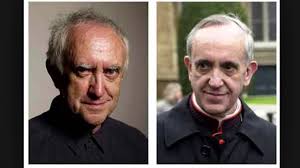
After I got over seeing the Pope playing Wolsey, I was most struck by the seeming contradiction between Cromwell's contempt for Catholicism and the hierarchical Church and his dogged loyalty in the face of some danger to that most political of prelates.
Is it principle? or misjudged, and rather fawning careerism and gratitude toward the mighty who looked upon his lowliness...
And the touching domestic scenes highlighting Cromwell's love for and very progressive attitude toward even his female children really resonated with me.
In fact, they seemed instantly familiar.
Well, there's a reason,
But the tv show?
When all is said and done?
Well, it's gorgeously somber, lots of clever dialogue, remarkably effective score, good casting so far, and Mark Rylance, of whom I have been able to see far too little, is never, and has never been anything short of brilliant, (I couldn't afford Twelfth Night when I was near it, or it me, but some day I'll find a complete recording.) I marvel at his minimalism on screen, wonder how everything he does can be so perfectly calibrated for the camera and how it can work on stage.)
But when all is said and done?
Well, for an entertainment, it commits an even greater sin than lying -
Seriously, making Cromwell the hero and More a villain?
(Though I suppose if you want to paint St Thomas More as an evil, humorless zealot, Anton Lesser's casting is a stroke of genius - the tight-rope he walked on Endeavour, between prissy, hateful bureaucrat and prissy sympathetic colleague was masterfully done.)
I have read only a little of Mantel's wok, and while I can admire her prose, I despise her for her undisguised and uninformed contempt for me.
(Yes, for me, for me personally and for you too, if you call yourself Catholic.)
And I am disposed, (I, as much as she, am the product of my prejudices,) to agree with most of what Simon Schama has to say:
It grates a bit to accept that millions now think of Thomas Cromwell as a much-maligned, misunderstood pragmatist from the school of hard knocks who got precious little thanks for doing Henry VIII’s dirty work. When I was doing research for A History of Britain, the documents shouted to high heaven that Thomas Cromwell was, in fact, a detestably self-serving, bullying monster who perfected state terror in England, cooked the evidence, and extracted confessions by torture. He also unleashed small-minded bureaucratic “visitors” to humiliate, evict and dispossess thousands of monks and nuns.An aside, I recently read something, (which I will not bother to find and link because it is wrong, and I don't want to give them another click,) discussing the economics of Henry's reign which described the "windfall," of the proceeds from the
Windfalls are the fruit that providence allows you without the work of picking.
If you hack down the tree and strip it bear, the booty is not windfall. Words, people! they MEAN things!
And a further aside, I was also doing some reading on "poor laws," not of that era, but in the process came across quite a bit of scholarship concerning the increased suffering of the poor as a direct result of Henry's and Cromwell's destruction of the greatest charitable network their nation would ever have.
Those "fat, prosperous" monks were not swanning about bedecked in jewels and staging cupcake wars, they were creating and running the hospitals, soup kitchens, homeless shelters and schools of their time.
Anyway, back to Wolf Hall.
But Himself is addicted in equal measure to television and history, so he was looking forward to it very much, and I realized that I should at least give it a look, and try to be objective.
After I got over seeing the Pope playing Wolsey, I was most struck by the seeming contradiction between Cromwell's contempt for Catholicism and the hierarchical Church and his dogged loyalty in the face of some danger to that most political of prelates.
Is it principle? or misjudged, and rather fawning careerism and gratitude toward the mighty who looked upon his lowliness...
And the touching domestic scenes highlighting Cromwell's love for and very progressive attitude toward even his female children really resonated with me.
In fact, they seemed instantly familiar.
Well, there's a reason,
Curiously enough, the man who had really good relations with his children in a totally modern fashion, including giving his daughters the same elaborate education as men; Greek, Latin, mathematics and so on, is the villain as he is presented on Wolf Hall. Thomas More really did have these affectionate relations with his children. In other words, as I understand it, [the Mantel book] is based on a deliberate perversion of fact.As a loyal supporter of Good King Richard, (III,) I am wary of clever fiction that deceives centuries of people that villains are heroic and good men villainous - hopefully, Mantel's fables will not prove so powerful nor so lasting.
But the tv show?
When all is said and done?
Well, it's gorgeously somber, lots of clever dialogue, remarkably effective score, good casting so far, and Mark Rylance, of whom I have been able to see far too little, is never, and has never been anything short of brilliant, (I couldn't afford Twelfth Night when I was near it, or it me, but some day I'll find a complete recording.) I marvel at his minimalism on screen, wonder how everything he does can be so perfectly calibrated for the camera and how it can work on stage.)
But when all is said and done?
Well, for an entertainment, it commits an even greater sin than lying -
It's a bore!!!!!
Monday, 16 March 2015
Why should I go to the theater for sex and violence, when I can get that at home?
Odd article in the New York Times about the problem of sexual harassment in the theater.
It is slanted slightly in the direction of The Actor's Union Doesn't Do Enough About It And Needs New Rules.
And it rightly notes that stage managers, (besides one they referenced as hitting on a complainant himself,) are members of Equity yet also a part of management, and that the main objective is almost always going to be letting the Show Go On, so maybe not the best person address a problem reported by a young(er) less connected victim?
Well, yeah.
But how could a journalist tackle this subject and not even mention, perhaps, not even know about, the existence of The Deputy? AEA always has a deputy or two in every union production.
Confidential, usually experienced in and knowledgeable about, and often actually IN, the vulnerable performer's very condition, and required to represent the POV of no one but the performers and their union.
So for all the interviews he may have conducted, I don't think Patrick Healey really researched his subject with much care.
But I am more bothered that the story that opens the article is... well, it doesn't really illustrate the problem they're trying to present, at least to this reader.
A woman slaps her boyfriend.
The man later slaps her.
She goes to rehearsal with a black eye and finds out that he is more valuable to the production than she is.
As someone who's gotten my share of black eyes, and given and received unfortunate stage bruises, (including mistimed hits that really connected,) I have never known a slap to cause a black eye.
And in the article, indeed, it seems not to have been the slap per se that had visible results, but that his slap had sufficient force to knock her down.
At the end of the anecdote, what I take away is that the woman did not feel that what had happened rose to the level of meriting the attention of law enforcement.
She did seem to feel the incident was worth the man losing his job over, or something....
You see, she didn't want to leave the production, but she didn't want to be forced to be around him, and well... he was in the production, they were portraying lovers. So, absent a serious re-thinking of Shakespeare's intent, and a re-staging, I guess she wanted him fired.
But she also, apparently, in a Things That Make You Go Huh????? detail, didn't even think the blow and the injury was sufficient to cause a break-up, at least not for a while, since several months later, the production is changing venues, by which I mean GOING TO ANOTHER COUNTRY, and their relationship is "all but over."
"All but over?"
It is gravely wrong for a man to strike a woman, I'm not defending that. From the details given I think the shmuck should have at least spent the night in a cell. But it does not seem that he intended to do any more damage to her than she had intended to do to him. So I'm not certain the woman shouldn't have spent some time in the hoosegow a few nights earlier.
And I'm damned sure, unless she is emotionally or mentally damaged in some way that precludes her being let out without a keeper, she should have left his sorry carcass with a little more dispatch.
Like, that night.
Is she not capable of caring for herself? of making rational life decision?
It seems she is.
So why... Omiwerd, i can't believe I am about to stick up for a producer!!!!!.... why, in her mind, is it up to the producer to do for her in her professional life, what she did not even bother to do in her private life?
Man up, woman!
And I know I shouldn't extrapolate overarching sociological principles and predictions from one situation, ("the plural of anecdote is not 'data',") but I fear these sorts of problems are going to become more and more common and more and more unsolvable as the notions of license and privacy and consent and restraint become ever more tangled in our society's collective mind and psyche.
Look at the idiotic notion of teaching children in sex education about consent, that an elementary schoolchild should say "no" to "unwanted touch." (so if the kid's okay with it, full speed ahead?)
Or the main-streaming of violent, deviant practices masquerading as romance?
Or the granting of adult autonomy, (with concomitant money and opportunity,) to people who are simultaneously encouraged to prolong their adolescence.
People, young people especially, are consistently told that all is acceptable, all is permitted, everything is morally neutral, and nothing is anyone elses concern - and they are shamed, (or even prosecuted,) if they disagree. And yet time after time, consequences seem to give evidence that all that old-fashioned conventional wisdom and morality was, uhm.... right?
A link on the front page of the Times tells us that a college is "trying to balance student safety with open-mindedness after 12 were hospitalized last month," from overdoses.
How's that working out for ya?
It is slanted slightly in the direction of The Actor's Union Doesn't Do Enough About It And Needs New Rules.
And it rightly notes that stage managers, (besides one they referenced as hitting on a complainant himself,) are members of Equity yet also a part of management, and that the main objective is almost always going to be letting the Show Go On, so maybe not the best person address a problem reported by a young(er) less connected victim?
Well, yeah.
But how could a journalist tackle this subject and not even mention, perhaps, not even know about, the existence of The Deputy? AEA always has a deputy or two in every union production.
Confidential, usually experienced in and knowledgeable about, and often actually IN, the vulnerable performer's very condition, and required to represent the POV of no one but the performers and their union.
So for all the interviews he may have conducted, I don't think Patrick Healey really researched his subject with much care.
But I am more bothered that the story that opens the article is... well, it doesn't really illustrate the problem they're trying to present, at least to this reader.
A woman slaps her boyfriend.
The man later slaps her.
She goes to rehearsal with a black eye and finds out that he is more valuable to the production than she is.
As someone who's gotten my share of black eyes, and given and received unfortunate stage bruises, (including mistimed hits that really connected,) I have never known a slap to cause a black eye.
And in the article, indeed, it seems not to have been the slap per se that had visible results, but that his slap had sufficient force to knock her down.
At the end of the anecdote, what I take away is that the woman did not feel that what had happened rose to the level of meriting the attention of law enforcement.
She did seem to feel the incident was worth the man losing his job over, or something....
You see, she didn't want to leave the production, but she didn't want to be forced to be around him, and well... he was in the production, they were portraying lovers. So, absent a serious re-thinking of Shakespeare's intent, and a re-staging, I guess she wanted him fired.
But she also, apparently, in a Things That Make You Go Huh????? detail, didn't even think the blow and the injury was sufficient to cause a break-up, at least not for a while, since several months later, the production is changing venues, by which I mean GOING TO ANOTHER COUNTRY, and their relationship is "all but over."
"All but over?"
It is gravely wrong for a man to strike a woman, I'm not defending that. From the details given I think the shmuck should have at least spent the night in a cell. But it does not seem that he intended to do any more damage to her than she had intended to do to him. So I'm not certain the woman shouldn't have spent some time in the hoosegow a few nights earlier.
And I'm damned sure, unless she is emotionally or mentally damaged in some way that precludes her being let out without a keeper, she should have left his sorry carcass with a little more dispatch.
Like, that night.
Is she not capable of caring for herself? of making rational life decision?
It seems she is.
So why... Omiwerd, i can't believe I am about to stick up for a producer!!!!!.... why, in her mind, is it up to the producer to do for her in her professional life, what she did not even bother to do in her private life?
Man up, woman!
And I know I shouldn't extrapolate overarching sociological principles and predictions from one situation, ("the plural of anecdote is not 'data',") but I fear these sorts of problems are going to become more and more common and more and more unsolvable as the notions of license and privacy and consent and restraint become ever more tangled in our society's collective mind and psyche.
Look at the idiotic notion of teaching children in sex education about consent, that an elementary schoolchild should say "no" to "unwanted touch." (so if the kid's okay with it, full speed ahead?)
Or the main-streaming of violent, deviant practices masquerading as romance?
Or the granting of adult autonomy, (with concomitant money and opportunity,) to people who are simultaneously encouraged to prolong their adolescence.
People, young people especially, are consistently told that all is acceptable, all is permitted, everything is morally neutral, and nothing is anyone elses concern - and they are shamed, (or even prosecuted,) if they disagree. And yet time after time, consequences seem to give evidence that all that old-fashioned conventional wisdom and morality was, uhm.... right?
A link on the front page of the Times tells us that a college is "trying to balance student safety with open-mindedness after 12 were hospitalized last month," from overdoses.
How's that working out for ya?
Friday, 6 March 2015
I Can't Share This With My Husband...
... because Himself thinks I have an unhealthy obsession with pop culture, (with pop culture which is current, as opposed to his fixation on entertainment endeavours from two and three decades before he was born....)
But anyway, this:

.... TOTALLY happened to him once, he took a tumble whilst swooping a long cape in which he had become entangled on a staircase while performing onstage.
Really. Same as Ms Ciccone. (Actually, he fell much further, with greater consequence. You see, there had been no goat to break his fall.Thankfully, he was younger, and healed quickly.)
You'd think he'd want to know, but trust me, he doesn't.
But anyway, this:
.... TOTALLY happened to him once, he took a tumble whilst swooping a long cape in which he had become entangled on a staircase while performing onstage.
Really. Same as Ms Ciccone. (Actually, he fell much further, with greater consequence. You see, there had been no goat to break his fall.Thankfully, he was younger, and healed quickly.)
You'd think he'd want to know, but trust me, he doesn't.
What IS a "concelebration alb," anyway?
(Seriously, have I ever clicked on a link, found what I was seeking, and NOT clicked on another, irrelevant link?)
It's almost Shakespearean, isn't it?
"Where the Thyme is Sucked, There Suck I"?

(Seriously, have I ever clicked on a link, found what I was seeking, and NOT clicked on another, irrelevant link?)
It's almost Shakespearean, isn't it?
"Where the Thyme is Sucked, There Suck I"?
Wednesday, 4 March 2015
Denial is Just a River in Egypt
I was in a cast with ... this woman, once.
A few days into rehearsal I said to this woman, "I know you, it's been driving me crazy, but I finally remembered where, we met at an audition once."
No, this woman told me, I never forget a face.
It was backstage at the XXX theater on Broadway, it was an open call for YYY.
I was indeed at that audition, but I would remember if I'd met you.
You told me that had just come back from doing a show, ZZZ in the Bahamas, where you had learned to ride a motor scooter.
I did work there in that play, but no, I'm quite sure.
But don't you remember, we did the oh-do-you-know, have-you-ever-worked-with thing and we discovered that a guy I went to high school, QQQ, had played your son in that production?
Why, yes QQQ was in that cast with me, but no, I'm positive we've never met before.
It was all very friendly, so I hadn't offended her; and she didn't keep he voice hushed and dash furtive glances, so she wasn't in witness protection; and she was competent in a pretty wordy play so it wasn't memory; and it turned out that I knew her agent from long ago and we discussed him, so it wasn't long term memory; and she remembered that particular audition so it wasn't global transient amnesia.
It was just denial, pure and simple, denial, from what motive I have never been able to fathom.
I only bring it up, because I've read a couple of columns online or on paper, recently, like this one, found them resonating with me, (you know I love my Aldi,) found myself agreeing with the writer - and then gotten to the end and realized my agreement was supposed, somehow, to put me quite solidly on the conservative side of our political/ecological/cultural/gustatory divide.
Huh?
But I hate liver, I love wind farms. Other than being 100% pro-life, I tend to fall on the liberal or progressive side of things, big government, rah-rah!, (and even on life issues -- I'm also anti-capital punishment.)
Still....
Wondering, am I a closet conservative? who doesn't even know I'm in a closet?
A few days into rehearsal I said to this woman, "I know you, it's been driving me crazy, but I finally remembered where, we met at an audition once."
No, this woman told me, I never forget a face.
It was backstage at the XXX theater on Broadway, it was an open call for YYY.
I was indeed at that audition, but I would remember if I'd met you.
You told me that had just come back from doing a show, ZZZ in the Bahamas, where you had learned to ride a motor scooter.
I did work there in that play, but no, I'm quite sure.
But don't you remember, we did the oh-do-you-know, have-you-ever-worked-with thing and we discovered that a guy I went to high school, QQQ, had played your son in that production?
Why, yes QQQ was in that cast with me, but no, I'm positive we've never met before.
It was all very friendly, so I hadn't offended her; and she didn't keep he voice hushed and dash furtive glances, so she wasn't in witness protection; and she was competent in a pretty wordy play so it wasn't memory; and it turned out that I knew her agent from long ago and we discussed him, so it wasn't long term memory; and she remembered that particular audition so it wasn't global transient amnesia.
It was just denial, pure and simple, denial, from what motive I have never been able to fathom.
I only bring it up, because I've read a couple of columns online or on paper, recently, like this one, found them resonating with me, (you know I love my Aldi,) found myself agreeing with the writer - and then gotten to the end and realized my agreement was supposed, somehow, to put me quite solidly on the conservative side of our political/ecological/cultural/gustatory divide.
Huh?
But I hate liver, I love wind farms. Other than being 100% pro-life, I tend to fall on the liberal or progressive side of things, big government, rah-rah!, (and even on life issues -- I'm also anti-capital punishment.)
Still....
Wondering, am I a closet conservative? who doesn't even know I'm in a closet?
Monday, 22 December 2014
Merry Christmas-- oh, and by the way........
The Holy Father had a word or two for the members of the Curia.
Anyone ever take advantage of Christmas or your birthday to give you a diet book? or a hair removal system? or mouthwash?
I worked for a director/producer once, who slapped a musical together in about half the usual time, partly to save money on our salaries, (3/4 of us had done the show for him before,) and partly because he wanted to jet off on a ski vacation.
He popped back in for one evening, and left several pages of notes, all of them general, all of them insulting.
At the end of it, it said something like, "Not all of you are guilty of all of this.".
He apparently cared about the show, but not enough to address any problems specifically, or to talk to an actors individually, (or maybe privately?) or, heaven forbid, to take the time for a brush-up rehearsal. (Sticking around another day would have required him to miss a day on the slopes, he'd only been in Tahoe or something, you see, but now was on his way to Europe.)
So essentially, he had dressed down all of us, in front of each other, even though, as he admitted, we weren't all guilty of whatever it was to which he objected.
Which we... well, we weren't sure what it was to which he objected, since his criticisms were so vague and full of buzz-words and cant, ("not in the moment", "making the stakes too high some places and not high enough in others", "not feeling the journey," etc.
The stage manager had no idea, either.
The upshot was that nothing much changed - except that anyone who hadn't already kind of despised him, (he was a lousy director, and a kind of dilettante who fabricated his resume - to what end I don't know, as he owned the company and didn't need to impress anyone to get or keep the job,) began to.
What was his purpose, I wonder to this day.
I suppose it's possible that the entire Curia suffers from each of the 15 - not sure i'd want to be around that many old guys with existential schizophrenia.
Anyone ever take advantage of Christmas or your birthday to give you a diet book? or a hair removal system? or mouthwash?
I worked for a director/producer once, who slapped a musical together in about half the usual time, partly to save money on our salaries, (3/4 of us had done the show for him before,) and partly because he wanted to jet off on a ski vacation.
He popped back in for one evening, and left several pages of notes, all of them general, all of them insulting.
At the end of it, it said something like, "Not all of you are guilty of all of this.".
He apparently cared about the show, but not enough to address any problems specifically, or to talk to an actors individually, (or maybe privately?) or, heaven forbid, to take the time for a brush-up rehearsal. (Sticking around another day would have required him to miss a day on the slopes, he'd only been in Tahoe or something, you see, but now was on his way to Europe.)
So essentially, he had dressed down all of us, in front of each other, even though, as he admitted, we weren't all guilty of whatever it was to which he objected.
Which we... well, we weren't sure what it was to which he objected, since his criticisms were so vague and full of buzz-words and cant, ("not in the moment", "making the stakes too high some places and not high enough in others", "not feeling the journey," etc.
The stage manager had no idea, either.
The upshot was that nothing much changed - except that anyone who hadn't already kind of despised him, (he was a lousy director, and a kind of dilettante who fabricated his resume - to what end I don't know, as he owned the company and didn't need to impress anyone to get or keep the job,) began to.
What was his purpose, I wonder to this day.
I suppose it's possible that the entire Curia suffers from each of the 15 - not sure i'd want to be around that many old guys with existential schizophrenia.
| "And watch out for that funeral face, you guys...." |
Tuesday, 21 October 2014
'Cause That's What the Theater-going Experience Needs
Himself alerted me to this, it doesn't bother me particularly in this case, because, well.... Mamma Mia
But the handwriting is on the wall, "public entertainment" is a different animal than it was just a short time ago, and it will not be getting better any time soon if ever.

But the handwriting is on the wall, "public entertainment" is a different animal than it was just a short time ago, and it will not be getting better any time soon if ever.
Wednesday, 16 July 2014
A Belated Thank You the the Three Graces for the CMAA Colloquium
Speaking of James Joyce, during the closing brunch in Indy, kept thinking of Gabriel's toast to the Morkin sisters in The Dead, and of how I wished to make such a toast to Mary, Janet and Mary Jane -- and then finally, of how the way in which my toast would most resemble his was in it's nervous ineptness, and pretentiousness
But in the safety of my own blog, I'll be as pretentious and inept as I please!
So with apologies to Joyce...
Ladies and Gentlemen.
—It has fallen to my lot tonight I'm going to seize the opportunity this morning to
perform a very pleasing task but a task for which I am afraid my
poor powers as a speaker are all too inadequate.
But, however that may be, I can only ask you today to take the will for the deed and to lend me your attention for a few moments while I endeavour to express to you in words what my feelings are on this occasion.
Ladies and Gentlemen. It is not the first time that we have gathered together under this hospitable roof, at such a repast, around this
hospitable board. It is not the first time that we have been the
recipients—or perhaps, I had better say, the victims—of the
hospitality hard work of certain good ladies.
—I feel more strongly with every recurring year thatour
country the CMAA has no tradition which does it so much honour and which
it should guard so jealously as that of its hospitality.
—A new generation is growing up in our midst, a generation actuated by new ideas and new principles. It is serious and enthusiastic for these new ideas and its enthusiasm, even when it is misdirected, is, I believe, in the main sincere. But we are living in a sceptical and, if I may use the phrase, a thought- tormented age: and sometimes I fear that this new generation, educated or hypereducated as it is, will lack those qualities of humanity, of hospitality, of kindly humour which belonged to an older day. Listening to-night to the names of all those great
singers Praying at the Requiem for CMAA members of the past... let us hope, at least, that in gatherings such as this we shall
still speak of them with pride and affection, still cherish in our
hearts the memory of those dead and gone great ones whose fame
the world we will not willingly let die.
There are always, in gatherings such as this, sadder thoughts that will recur to our minds: thoughts of the past, of youth, of changes, of absent faces that we miss here tonight. Our path through life is strewn with many such sad memories: and were we to brood upon them always we could not find the heart to go on bravely with our work among the living.
—Therefore, I will not linger on the past. I will not let any gloomy moralising intrude upon us hereto-night today. Here we are
gathered together for a brief moment from the bustle and rush of
our everyday routine. We are met here as friends, in the spirit of
good-fellowship, as colleagues, also to a certain extent, in the true
spirit of camaraderie, and as the guests of—what shall I call
them?—the Three Graces of the Dublin musical world CMAA.
—I will not attempt to play to-night the part that Paris played on another occasion. I will not attempt to choose between them. The task would be an invidious one and one beyond my poor powers. For when I view them in turn, whether it beour chief
hostess herself, whose good heart, Janet Gorbitz whose too good heart, has
become a byword with all who know her, or her sister, Mary Webster who seems
to be gifted with perennial youth and whose singing must have
been a surprise and a revelation to us all to-night at Mass, or, last but not
least, when I consider our youngest hostess, talented, cheerful,
hard-working and the best of nieces, Mary Jane Ballou I confess, Ladies and
Gentlemen, that I do not know to which of them I should award
the prize.
—Let us toast them all three together. Let us drink to their health, wealth, long life, happiness and prosperity and may they long continue to hold the proud and self-won position which they hold in their profession and the position of honour and affection which they hold in our hearts.
Incidentally,if you have seen neither the movie staring, IIRC Donal McCann, nor the very moving musical of The Dead, I urge you to take any opportunity to do so.
In Chicago I saw an actress named Paula Scrofano play Greta, and it was an astoundingly centered, to use a much over-used word, performance.
But in the safety of my own blog, I'll be as pretentious and inept as I please!
So with apologies to Joyce...
Ladies and Gentlemen.
—
But, however that may be, I can only ask you today to take the will for the deed and to lend me your attention for a few moments while I endeavour to express to you in words what my feelings are on this occasion.
Ladies and Gentlemen. It is not the first time that we have gathered togethe
—I feel more strongly with every recurring year that
—A new generation is growing up in our midst, a generation actuated by new ideas and new principles. It is serious and enthusiastic for these new ideas and its enthusiasm, even when it is misdirected, is, I believe, in the main sincere. But we are living in a sceptical and, if I may use the phrase, a thought- tormented age: and sometimes I fear that this new generation, educated or hypereducated as it is, will lack those qualities of humanity, of hospitality, of kindly humour which belonged to an older day.
There are always, in gatherings such as this, sadder thoughts that will recur to our minds: thoughts of the past, of youth, of changes, of absent faces that we miss here tonight. Our path through life is strewn with many such sad memories: and were we to brood upon them always we could not find the heart to go on bravely with our work among the living.
—Therefore, I will not linger on the past. I will not let any gloomy moralising intrude upon us here
—I will not attempt to play to-night the part that Paris played on another occasion. I will not attempt to choose between them. The task would be an invidious one and one beyond my poor powers. For when I view them in turn, whether it be
—Let us toast them all three together. Let us drink to their health, wealth, long life, happiness and prosperity and may they long continue to hold the proud and self-won position which they hold in their profession and the position of honour and affection which they hold in our hearts.
Incidentally,if you have seen neither the movie staring, IIRC Donal McCann, nor the very moving musical of The Dead, I urge you to take any opportunity to do so.
In Chicago I saw an actress named Paula Scrofano play Greta, and it was an astoundingly centered, to use a much over-used word, performance.
Friday, 6 June 2014
High School Theatrics, and Feeling Old
My recollection, (and is may be faulty,) is that there was a small kerfuffle over our drama club's choice of Once Upon a Mattress for the (public!) high school musical because the dramatis personae of the medieval themed farce includes a pregnant out-of-wedlock lady(-no-longer)-in-waiting.
How things have changed.
A retiring teacher with the sweet demeanor of Phyllis from The Office,

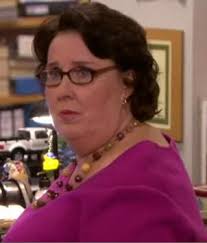
has issued an apology over some choices:
How things have changed.
A retiring teacher with the sweet demeanor of Phyllis from The Office,
has issued an apology over some choices:
A Washington high school teacher has apologized after an awards ceremony involved jokes about priests abusing children, and sex toys given as prizes.
The formal apology was made by Bellingham High School drama teacher Teri Grimes after a complaint was made by one of the parents who attended the event - but stormed out in disgust.
Wednesday, 4 June 2014
BurgerFi? OORAH!

Seeking out the meaty cheesy offerings of a new (to us, ) burger joint is a tried-and-true method of emotional compensation.
I can absolutely recommend Burger Fi and their "green" style is very nice indeed. (Scarfing down a massive amount of parmesan herb fries mitigates any savings on the carb front if that's your particular approach to attempted nutritional sanity....)
Tuesday, 25 May 2010
"Twelve Angry Housewives"
I think the time is ripe for a new version, or parody, (parody circumvents copyright...) of "Twelve Angry Men" as a gift to snarky and cheap theater producers everywhere (one set! only one costume for each actor!)
The climax writes itself, when the Henry Fonda character, coiffed with some serious extensions, and filled to bursting with righteous anger, flips the table around which the Jersey jury is gathered.

The climax writes itself, when the Henry Fonda character, coiffed with some serious extensions, and filled to bursting with righteous anger, flips the table around which the Jersey jury is gathered.
Sunday, 23 May 2010
"Eleven O'Clock Always Comes"
A line of Himself's that he dusts off whenever he or someone else is in a turkey, or an underprepared piece, or part of a cast that just isn't meshing, or has a rotten director, or crazy producer, is in a run where the cast is being decimated by flu and understudies and stage managers with script in hand are scrambling to pretend something worth watching is on display, or what have you...
Meaning, yeah, the next three hours might seem like torture, (yes, to the performers as much as to the audience, civilians!) but it will all be over by the end of the evening.
You can count on it.
(He said it to me more than once last week, need I add...)
Anyway, I realized at Mass this morning that I often, well, not that often, but TOO often, think something similar -- the Consecration always comes, the Spotless Victim is always offered upon the altar, the Body and Blood of Christ is always administered to unworthy me, it's always Mass.
Even when the celebrant is saying the creed the way he thinks it should have been written, (I wonder at the whinging of those who don't like the new translation - the sorts doing the whinging, seem to me the ones most liable not to be saying the text of the Mass as given now, who expects them to say the new translation any more faithfully?), when the songs are absurdly ego-centric, when the psalmist is wailing his performance in a key too high for him, when the servers are visibly and distractingly gazing around themselves instead of, well... actively participating, even when I haven't prayed over the readings as much as I should have, even when the kid in the pew behind me is kicking the back of my seat, even when the homily makes no sense or is inappropriately agenda-driven, even when the musical setting of the Ordinary we're being asked to sing does not respect the integrity of the Missal, even when the Penitential Rite is truncated (not replaced, as would have been lovely and appropriate, with a Sprinkling Rite,) --
And that's why I shall always be grateful for the Catholic Fiath.
Meaning, yeah, the next three hours might seem like torture, (yes, to the performers as much as to the audience, civilians!) but it will all be over by the end of the evening.
You can count on it.
(He said it to me more than once last week, need I add...)
Anyway, I realized at Mass this morning that I often, well, not that often, but TOO often, think something similar -- the Consecration always comes, the Spotless Victim is always offered upon the altar, the Body and Blood of Christ is always administered to unworthy me, it's always Mass.
Even when the celebrant is saying the creed the way he thinks it should have been written, (I wonder at the whinging of those who don't like the new translation - the sorts doing the whinging, seem to me the ones most liable not to be saying the text of the Mass as given now, who expects them to say the new translation any more faithfully?), when the songs are absurdly ego-centric, when the psalmist is wailing his performance in a key too high for him, when the servers are visibly and distractingly gazing around themselves instead of, well... actively participating, even when I haven't prayed over the readings as much as I should have, even when the kid in the pew behind me is kicking the back of my seat, even when the homily makes no sense or is inappropriately agenda-driven, even when the musical setting of the Ordinary we're being asked to sing does not respect the integrity of the Missal, even when the Penitential Rite is truncated (not replaced, as would have been lovely and appropriate, with a Sprinkling Rite,) --
Jesus always comes.
And that's why I shall always be grateful for the Catholic Fiath.
Saturday, 22 May 2010
Persons of the Adolescent Persuasion and Theatre
My interest in the anatomy of comedy just now springs from my just having been sprung.
I felt like a released prisoner last night when I doused all the lights, and secured all the theatre doors, and walked away from my last local commitment, an adaptation and staging of this.
(What a genius Wilde was, and how he must have loved his children.)
It appalls me how often this story is used and all the Christian symbolism stripped away, all notion of sacrifice gutted. (I think I might refine my work, and do something more with it, but that's neither here nor there.)
Every year it has gotten harder and harder to harness the energies of the thirteen-year-olds and reveal to them and marshal their not-yet-suspected skills.
Now, it is difficult, of course, for inexperienced actors to grasp what performing is; and what energy and focus are required of them until there is an actual performance, (which to these kids means in a nowhere-to-go-but-forward-because-there-is-an-audience run.
The concept of a dress rehearsal that no one but the directors or stage management is allowed to stop just could not be gotten through to them. Now that I think of it, in actual performance one child said, but we skipped some lines there! aloud. Oh, well...)
But that hasn't changed.
One difficulty is that our society is becoming autistic, incapable of relating face-to-face, of expressing emotions, of getting outside of the self, (who could deny a societal "impairment in social interaction; impairment in communication; and restricted interests and repetitive behaviors"?)
But what has really changed is the general discipline.
I see this almost across the board with young people, in language, in civility, in their treatment of property, in respect for others; so that impediment to success can come as no surprise.
But when the administration of the school is not supportive of what one is doing, and is not consistent and even-handed in the discipline they apply, there is not much one can do.
But I didn't mean this to be about that, what I am curious about is not the break-down of society, but the far more mundane and immediate question of Why Jokes Work.
In constructing the pieces I always have to balance water in the face, spit takes, prat-falls and Aflak ducks that the kindergartners will roar with laughter at with political and film references that the parents and teachers will get.
An extremely skilled and theatre-savvy parent gushed over the "wit" of the script, which she had read pre-curtain -- but not every gag received the hoped-for reactions, even when well delivered.
And yet other lines mumbled by barely audible adolescents furtively glancing into the wings or staring at the floor earned guffaws.
How does that work?
Can I analyze it so that I can reproduce the successes and eliminate the failures?
Probably not. But I want to try.
Oh, and lest my 2.3 readers think I am a complete ass, I know the story is not essentially a comic piece, (or even much of one,)despite the over-the-heads of children wit of many the author's original words, so it wasn't all spit takes, puns and slow burns.
And gratifyingly, the serious, touching, not to say heart-breaking moments played beautifully, even as presented by suddenly shy and inexpressive children.
As I said, Wilde was a genius.
I felt like a released prisoner last night when I doused all the lights, and secured all the theatre doors, and walked away from my last local commitment, an adaptation and staging of this.
(What a genius Wilde was, and how he must have loved his children.)
It appalls me how often this story is used and all the Christian symbolism stripped away, all notion of sacrifice gutted. (I think I might refine my work, and do something more with it, but that's neither here nor there.)
Every year it has gotten harder and harder to harness the energies of the thirteen-year-olds and reveal to them and marshal their not-yet-suspected skills.
Now, it is difficult, of course, for inexperienced actors to grasp what performing is; and what energy and focus are required of them until there is an actual performance, (which to these kids means in a nowhere-to-go-but-forward-because-there-is-an-audience run.
The concept of a dress rehearsal that no one but the directors or stage management is allowed to stop just could not be gotten through to them. Now that I think of it, in actual performance one child said, but we skipped some lines there! aloud. Oh, well...)
But that hasn't changed.
One difficulty is that our society is becoming autistic, incapable of relating face-to-face, of expressing emotions, of getting outside of the self, (who could deny a societal "impairment in social interaction; impairment in communication; and restricted interests and repetitive behaviors"?)
But what has really changed is the general discipline.
I see this almost across the board with young people, in language, in civility, in their treatment of property, in respect for others; so that impediment to success can come as no surprise.
But when the administration of the school is not supportive of what one is doing, and is not consistent and even-handed in the discipline they apply, there is not much one can do.
But I didn't mean this to be about that, what I am curious about is not the break-down of society, but the far more mundane and immediate question of Why Jokes Work.
In constructing the pieces I always have to balance water in the face, spit takes, prat-falls and Aflak ducks that the kindergartners will roar with laughter at with political and film references that the parents and teachers will get.
An extremely skilled and theatre-savvy parent gushed over the "wit" of the script, which she had read pre-curtain -- but not every gag received the hoped-for reactions, even when well delivered.
And yet other lines mumbled by barely audible adolescents furtively glancing into the wings or staring at the floor earned guffaws.
How does that work?
Can I analyze it so that I can reproduce the successes and eliminate the failures?
Probably not. But I want to try.
Oh, and lest my 2.3 readers think I am a complete ass, I know the story is not essentially a comic piece, (or even much of one,)despite the over-the-heads of children wit of many the author's original words, so it wasn't all spit takes, puns and slow burns.
And gratifyingly, the serious, touching, not to say heart-breaking moments played beautifully, even as presented by suddenly shy and inexpressive children.
As I said, Wilde was a genius.
.Downstairs ran the Giant in great joy, and out into the garden. He hastened across the grass, and came near to the child. And when he came quite close his face grew red with anger, and he said, "Who hath dared to wound thee?" For on the palms of the child's hands were the prints of two nails, and the prints of two nails were on the little feet..
"Who hath dared to wound thee?" cried the Giant; "tell me, that I may take my big sword and slay him."
"Nay!" answered the child; "but these are the wounds of Love."
"Who art thou?" said the Giant, and a strange awe fell on him, and he knelt before the little child.
And the child smiled on the Giant, and said to him, "You let me play once in your garden, to-day you shall come with me to my garden, which is Paradise."
Why is that funny?
I have a friend, who, in rehearsal with a particularly uninventive and by-the book-director... no, traffic cop....when the latter screamed at another hapless and trangressing performer who had dared to "move on the punchline," WHAT IS THE FIRST RULE OF COMEDY?!?!?!?!?, brought the house down by muttering, "I dunno.... a red nose is a funny nose?"
For all the contempt we may have had for him, it must be admitted that the bad director had something right, there are "rules" of comedy.
But what are they?
Himslef, when a director delivers the "There are two speeds for comedy, fast and faster," cliche, is wont to request, "Somebody please inform Jack Benny."
A review of a movie I had, and still have no interest of seeing, (so why bother reading the review? hmmm....) has this gem of a put down:
And in the scant attention I have paid to Saturday Night Life for the past decade or so, this seems to be their stock in trade, repetition, so that instant recognition of a character, phrase or situation brings on cheers and whoops by the studio audience, masking the fact that what then occurs is deeply unfunny.
Monty Python was, and David Letterman is beyond skilled in repeating the unhumorous until it become hysterically funny, (the latter, in some kind of meta-humor that mocks perseverance, obliviousness, a host of things...)
But why?
How do they do this? Since it must be admitted that most people can't, and that most things do NOT become funnier with repetition.
(Monty Python also used to do a send-up of academe that with a Ben Stein-level boring explanation of the mechanics of humor by dead-pan experts using custard pies, so perhaps this is something that defies analysis and on which I should not ponder...)
For all the contempt we may have had for him, it must be admitted that the bad director had something right, there are "rules" of comedy.
But what are they?
Himslef, when a director delivers the "There are two speeds for comedy, fast and faster," cliche, is wont to request, "Somebody please inform Jack Benny."
A review of a movie I had, and still have no interest of seeing, (so why bother reading the review? hmmm....) has this gem of a put down:
[The] sketch ... has repeated itself enough times to have acquired a reputation for being humorous.
And in the scant attention I have paid to Saturday Night Life for the past decade or so, this seems to be their stock in trade, repetition, so that instant recognition of a character, phrase or situation brings on cheers and whoops by the studio audience, masking the fact that what then occurs is deeply unfunny.
Monty Python was, and David Letterman is beyond skilled in repeating the unhumorous until it become hysterically funny, (the latter, in some kind of meta-humor that mocks perseverance, obliviousness, a host of things...)
But why?
How do they do this? Since it must be admitted that most people can't, and that most things do NOT become funnier with repetition.
(Monty Python also used to do a send-up of academe that with a Ben Stein-level boring explanation of the mechanics of humor by dead-pan experts using custard pies, so perhaps this is something that defies analysis and on which I should not ponder...)
Subscribe to:
Posts (Atom)